What is a CV Axle? Symptoms, CV Joint Failure, and Replacement Guide

Ever wonder how your car manages to deliver power to the wheels while simultaneously bouncing over potholes and navigating sharp turns? The secret lies in the CV axle.


Whether you're hauling gear in a truck, commuting in a compact car, or taking the family out in an SUV, this constant velocity axle (also known as a half shaft) is the vital link that keeps you moving. It acts as the high-tech bridge between your transmission and your front wheels, ensuring that engine torque translates into smooth, reliable motion on the road.
Unlike a rigid, old-school axle, a CV axle is designed to be flexible. It maintains a constant velocity and steady speed even as your suspension works overtime or you're deep into a turning maneuver.

Anatomy of an Axle: How CV Joints Keep You Moving
A standard CV axle assembly is a precision instrument made of several rugged parts working in harmony. To understand how to replace or repair one, you first need to learn what is inside:
-
Inner CV Joint: Slotted directly into the transmission. It’s the pivot point that allows your axle to move up and down as your suspension reacts to the terrain.
-
Outer CV Joint: The "business end" connected to the wheel hub. This is the sophisticated joint that allows your front wheels to steer while still receiving a steady flow of power.
-
The Shaft: A heavy-duty steel rod that spans the distance between the two CV joints, built to handle massive amounts of torque.
-
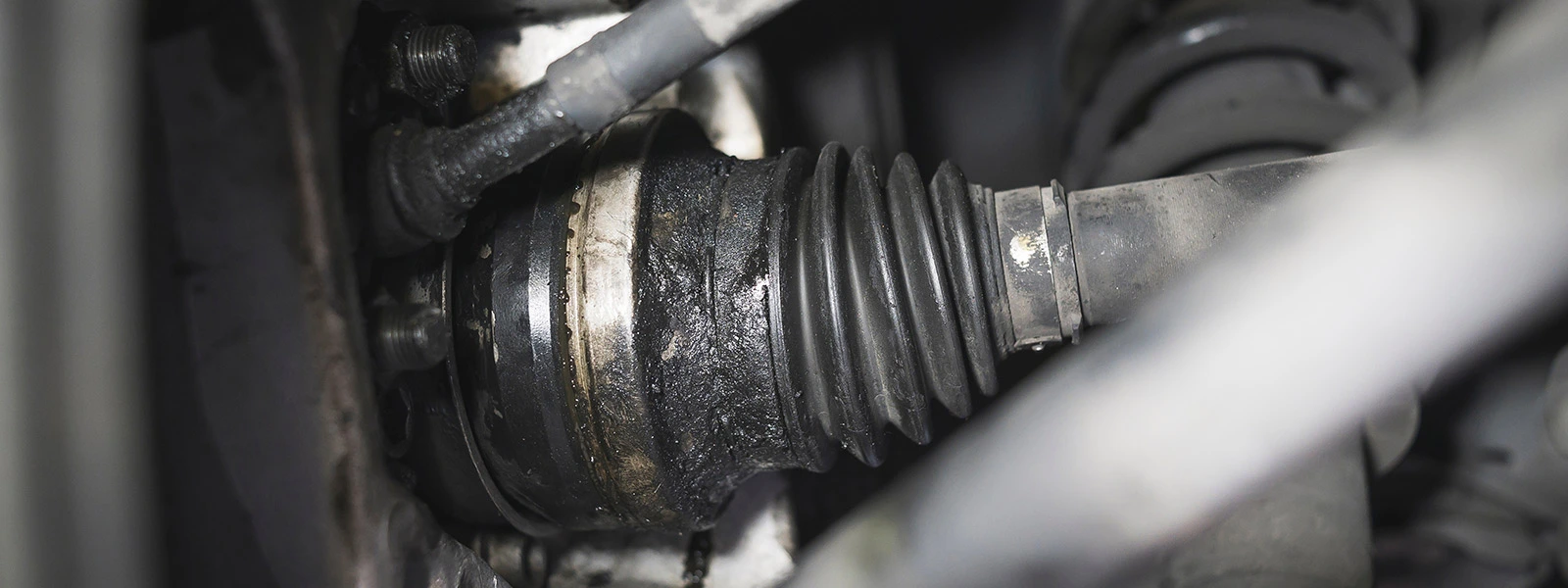
CV Boots: These pleated rubber "accordions" are the first line of defense. Filled with high-temp grease, they keep the joint lubricated while sealing out dirt, water, and road salt.
-
Bearings: These precision internal bearings allow the joint to rotate with minimal friction, ensuring maximum efficiency at any speed.
Red Flags: Signs Your CV Axle Is About to Fail
CV axles are tough, but they aren't invincible. Over time, the constant stress and exposure to the elements cause wear. If a joint fails completely, the axle can snap, leaving you stranded on the side of the road.
Check for these common signs of a problem:
|
Symptom |
What It Likely Means |
|
Clicking or Popping |
A distinct sound or rhythm while turning; almost always a worn-out outer joint. |
|
Vibration under load |
Shaking during acceleration suggests a failing inner joint or a bent axle shaft. |
|
Grease on wheels |
A clear sign of a boot tear. If the grease is gone, damage is imminent. |
|
A heavy Clunk |
A loud sound when shifting from Park to Drive indicates excessive internal joint play. |
Drivetrain Layouts: FWD, AWD, and Beyond
The number and position of axles in your vehicle depend on your specific drivetrain:
-
Front-Wheel Drive (FWD): The industry standard. Two half shafts provide the driving force for the front wheels.
-
All-Wheel Drive (AWD): These systems use four CV axles to distribute power to every wheel for superior grip.
-
Rear-Wheel Drive (RWD): Common in performance cars or truck models with Independent Rear Suspension, connecting the rear differential to the wheels.

The Great Debate: CV Axles vs. Driveshafts
While people use the terms interchangeably, they serve different roles. CV axles use specialized CV joints to maintain speed during complex turning. Traditional driveshafts—often found on a heavy-duty truck—frequently use U-joints, which are better for the long, straight-line transfer of power through the vehicle.
Pro Tips for Repair: Save Time and Avoid Risk
If you find a tear in your boot or hear that dreaded clicking, you’ll need to decide: repair the joint or perform a full replacement?
-
Inspect Early to Save: Catching a leaking boot before the clicking starts means you might only need to replace the boot and add fresh grease—a much cheaper repair that lets you save money.
-
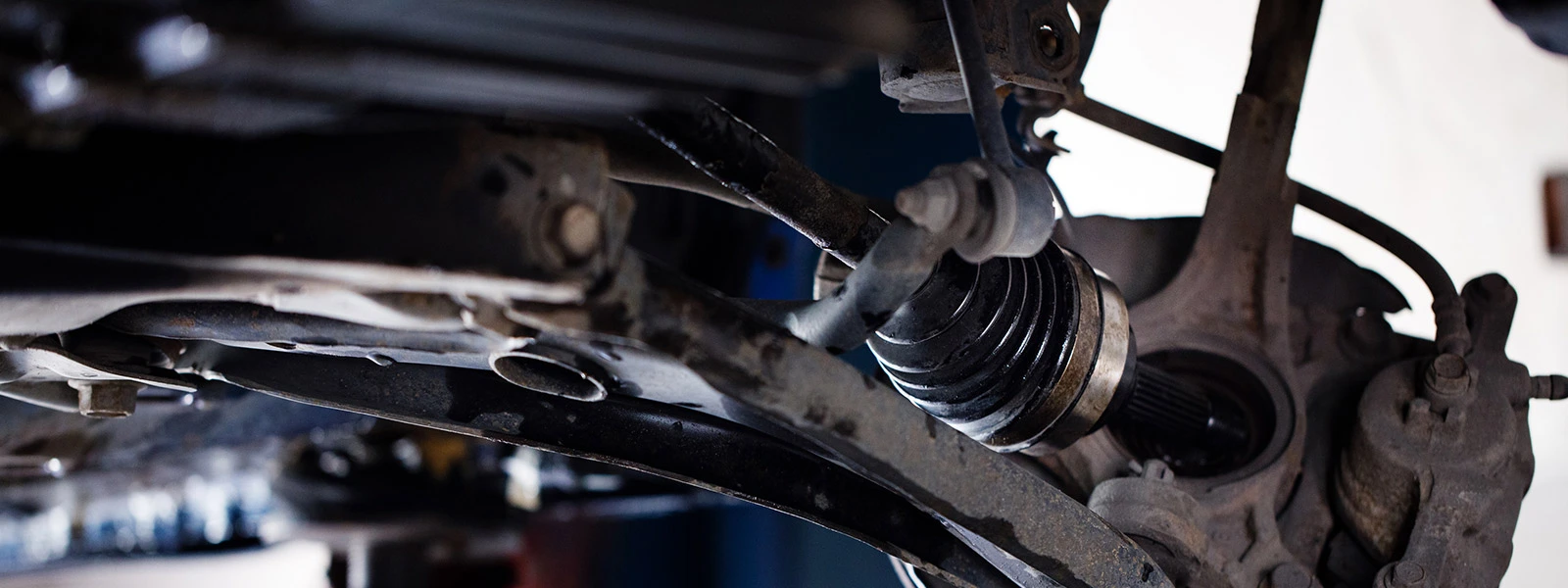
Mind the Spindle Bolt: To replace an axle, you have to remove the massive hub bolt or nut. Always use a high-torque wrench to tighten it to the car manufacturer's specs; don't risk a loose wheel.
-
The "While You're In There" Rule: Once the axle is out, it's the perfect time to inspect your wheel bearings and ball joints. If they look worse for wear, replacing them now will save you hours of labor later.
-
Buy the Full Assembly: For a fast and reliable replacement, buying the complete axle assembly is usually the smartest move. It eliminates the mess of packing grease and ensures every joint is factory-fresh.
Frequently Asked Questions (FAQ)
How long can I drive with a clicking CV axle?
Not long. Once the clicking begins, the joint is actively failing. Ignoring it increases the risk of the axle snapping, which could leave you stranded in traffic.
Can I replace a CV axle in my driveway?
Yes, many DIYers tackle this repair. You will require a heavy-duty jack, a large socket for the hub bolt, and a few hours of time.
What are the 4 types of axles?
Axles are the main part that causes driving torque transmission, manage weight, and control steering. Axles come with four types thatare front axle, rear axle, stub axle, and transaxle


Don't let a small problem turn into a major breakdown. Find the right parts for your vehicle and schedule your maintenance today!


