What is a Car's Hearter Core?

Explore your car's heater core: learn its role, find its location, and spot signs of trouble. Discover quick tips for unclogging through flushing, ensuring optimal heating system performance.


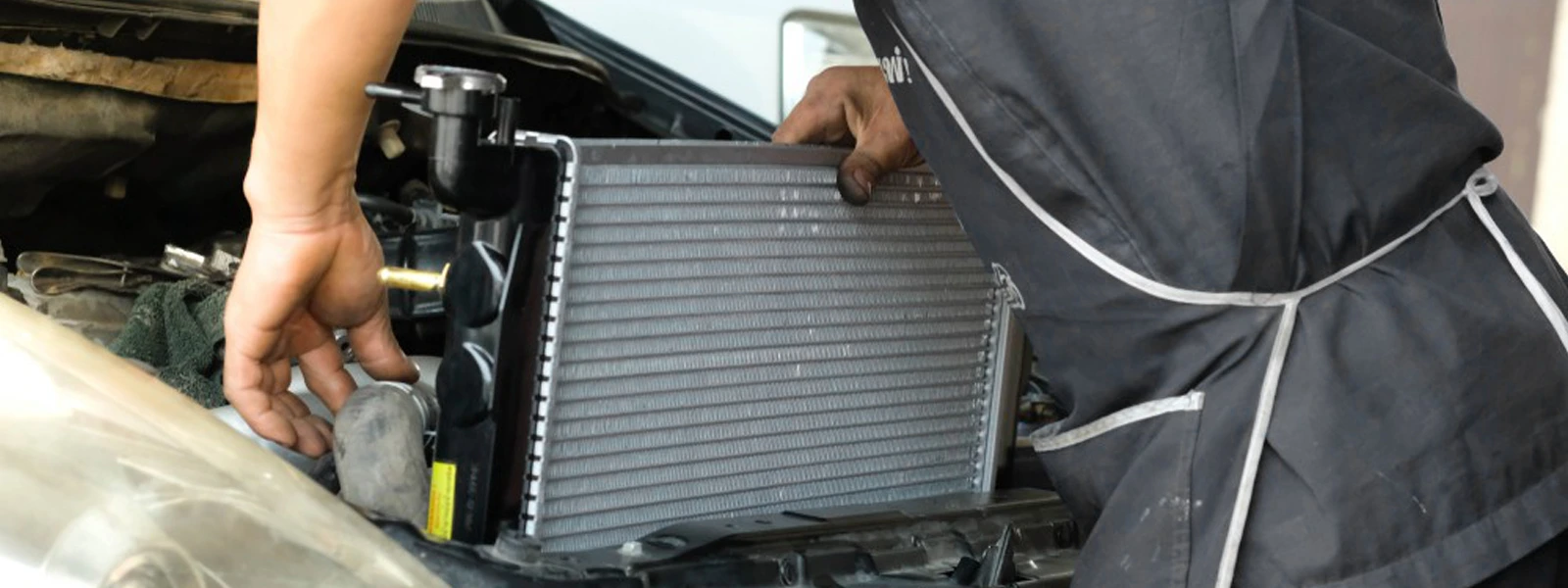
Consider the heater core as a diminutive counterpart to the conspicuous radiator located at the front of your vehicle. While the traditional radiator is designed to cool the engine's coolant, the heater core takes a different role, utilizing the heat from the same coolant to warm the interior of your car. Its fundamental function involves diverting coolant away from the broader cooling system within the vehicle, playing a crucial role in ensuring a comfortable and warm driving experience during colder conditions.
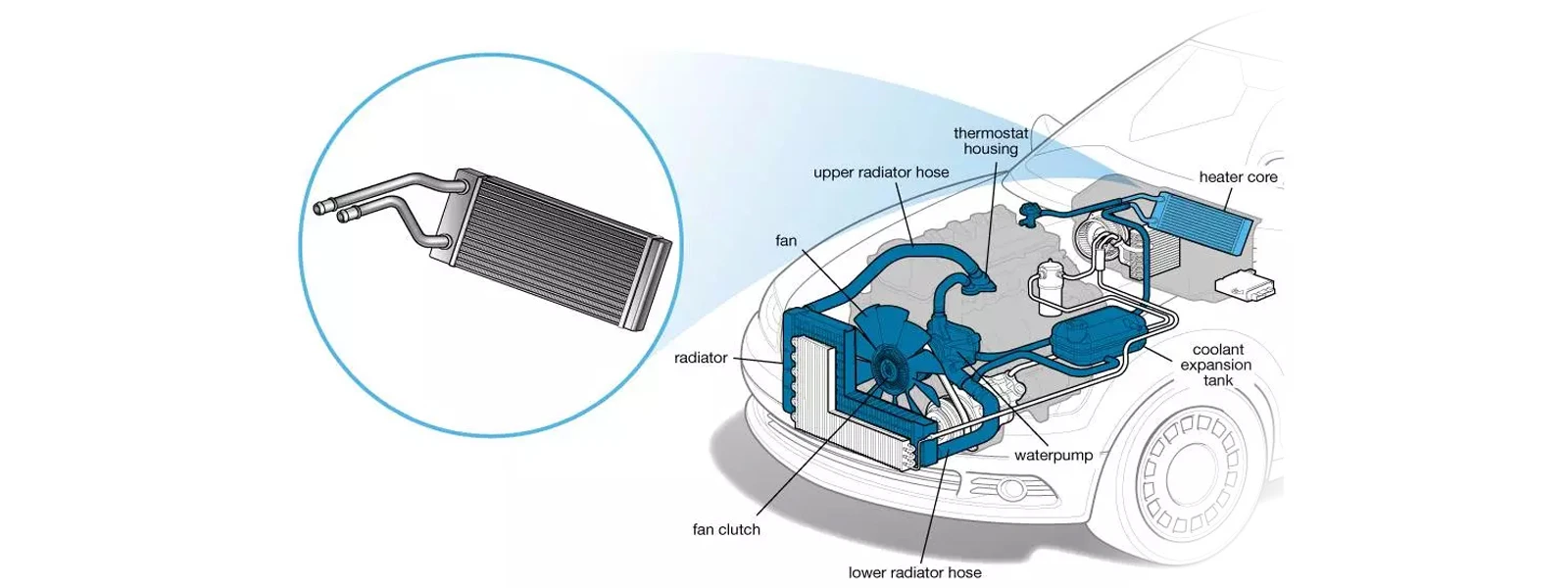
Furthermore, your heater core is instrumental in efficiently eliminating fog and frost from your windows, underscoring its pivotal role as a vital safety feature. To put it succinctly, the heater core is a key component of your vehicle's HVAC system. So yeah, ensuring that the heater core in your car or truck is functioning well is crucial to maintaining a comfortable passenger compartment and preventing fog accumulation on your windows.
Heater core location and how does it work
The heater core in a car is typically located inside the passenger compartment, often behind the dashboard on the firewall (the partition between the engine compartment and the interior of the car). It works in conjunction with the car’s cooling system to provide warm air for the interior when the heater is turned on. The exact location can vary between cars, trucks and SUVs, but it is generally situated on the passenger side of the vehicle. To locate the heater core, you can often trace the two heater hoses that run from the engine bay into the firewall; these hoses are connected to the inlet and outlet ports of the heater core.
As the car's engine operates and gradually warms up, the antifreeze/coolant absorbs the generated heat. The water pump then circulates this heated coolant throughout the cooling system. The coolant passes through the primary radiator to lower its temperature below the boiling point, and the entire system is regulated to maintain a constant temperature by the thermostat. When you activate the heating system inside the car, a valve is triggered to allow the flow of hot coolant to the heater core (in some cars). Alternatively, a door opens to direct air through the pre-warmed heater core. Given that the coolant is typically close to 200 degrees, it can rapidly supply a substantial amount of warm air either to your feet or to clear fog from the windshield.
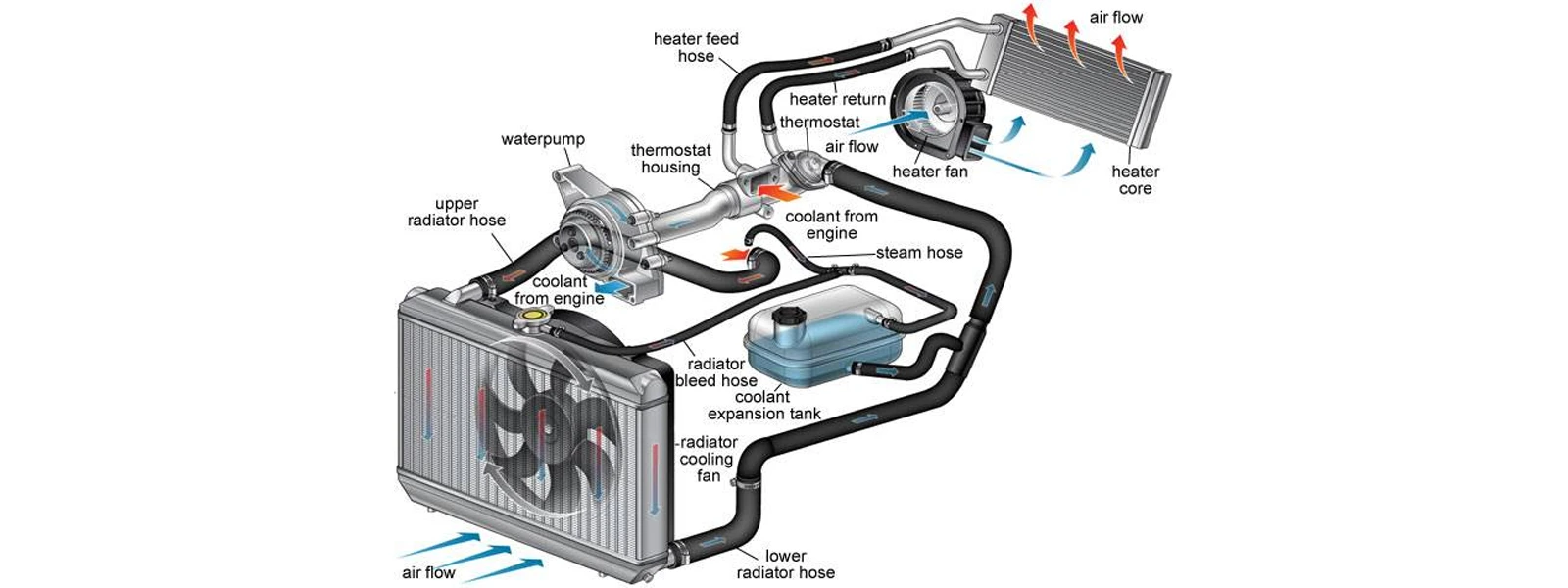
The most basic systems regulate temperature by blending cold external air with the hot air from the heater core, enabling customization of the warmth within the cabin. However dual-zone climate control systems divide the heater core into two sections. This design enables the driver and front-seat passenger to independently select their preferred cabin temperatures. These systems often incorporate a fan controlled by either a temperature sensor or a blend door. In some cases, high-end luxury models and large SUVs may include an additional heater core, allowing rear-seat passengers to independently adjust their temperatures too.
How do I know if my heater core is bad
Wondering if it's time for a new heater core? Keep an eye out for specific signs that could point to the need for a replacement. Here are some noteworthy indicators to help you assess:
- No heat inside the cabin:Lack of warm air when the heater is on may indicate a faulty heater core.
- Foggy windows:Persistent fogging on the inside of windows could be a sign of a leaking heater core.

- Sweet smellinside the car: A sweet or syrupy odor, especially when using the heater, may signal a leaking heater core.
- Coolant leakage:Wetness or a sweet liquid on the passenger side floor may indicate coolant leakage from the heater core.
- Overheating engine:A malfunctioning heater core could contribute to engine overheating; monitor the temperature gauge.
- Low coolant levels:Consistently low coolant levels, without an obvious external leak, may point to a heater core issue.
- Hissing or gurgling sounds:Unusual noises, such as hissing or gurgling, may suggest trapped air in the heater core or coolant system.
If you experience any of these signs, it's advisable to have your vehicle inspected by a qualified mechanic. Fixing or replacing a heater core can be a complex task, and a professional diagnosis will help identify the exact issue and the necessary course of action.
How to unclog a heater chore? Can I flucsh it?
If you suspect that the interior of your heater core is obstructed, there's a possibility of clearing it through flushing. While this method doesn't assure success, it's generally worth attempting before opting for the inconvenience or cost of replacing the heater core.
To simplify, the process of flushing a heater core usually includes detaching the two inlet/outlet hoses located on the vehicle's firewall, right at the heater core hose barbs. Substitute these with two temporary hoses, preferably transparent. Direct your water source into the inlet port and connect a hose to the outlet port, guiding it into a receptacle to capture the flushed contents. Exercise caution, as it is imperative to avoid high water pressure that could potentially cause the seams of your heater core to burst.
After everything is ready, initiate the water flush through the heater core, paying attention to any particles or debris emerging from the opposite end. Be cautious not to use excessive water pressure, and closely monitor the discharge hose. When the water flowing out of the heater core outlet becomes clear, your job is done.
Heater cores typically require no maintenance, but it's essential to inspect the hoses transporting coolant to it regularly—approximately every 6,000 miles or every six months. If you are in a situation where a new core is really needed, go to A-Premium.com and shop for the replacement heater core you need!


