Do Running Boards make a difference?

Examining runnining board‘s role in aiding passenger entry, enhancing look and providing practical utility. It explores different types, materials, and addresses common FAQs, underscoring their value as both functional and stylish accessories.
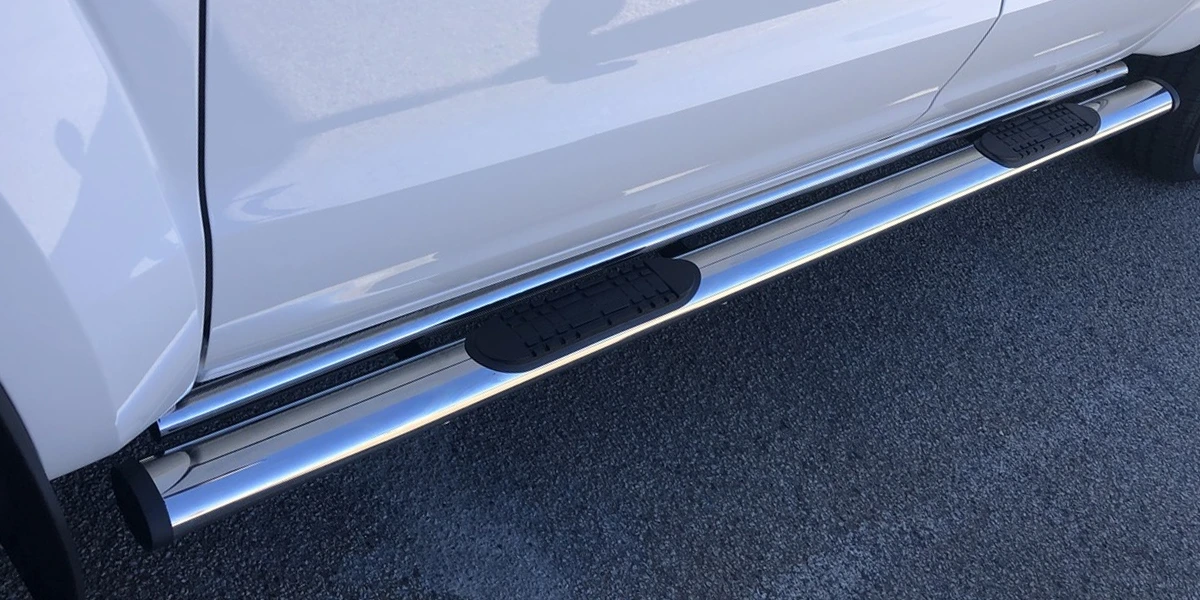


Picture yourself approaching a towering pickup truck or a sleek SUV. As you prepare to step inside, your foot easily finds its place on a sturdy, horizontal surface attached to the vehicle's lower side. These helpful platforms, known as running boards, play a crucial role in enhancing accessibility and convenience for passengers entering and exiting tall vehicles. Beyond their practical function, running boards also contribute to the overall aesthetics and functionality of a vehicle.
What are Running Boards
Running boards are accessories attached to the sides of vehicles, typically trucks, SUVs, and some larger passenger vehicles. They are designed to improve accessibility to the vehicle, particularly for passengers who may have difficulty stepping up or down due to the vehicle's height. They provide a convenient and sturdy platform to assist with entering or exiting the vehicle.
Running boards are typically made from durable materials such as aluminum, stainless steel, or molded plastics. They are designed to withstand the weight of passengers and provide a secure foothold.
Purpose of Running Boards
The benefits of running boards include:
Easy entrance and exit of large vehicle
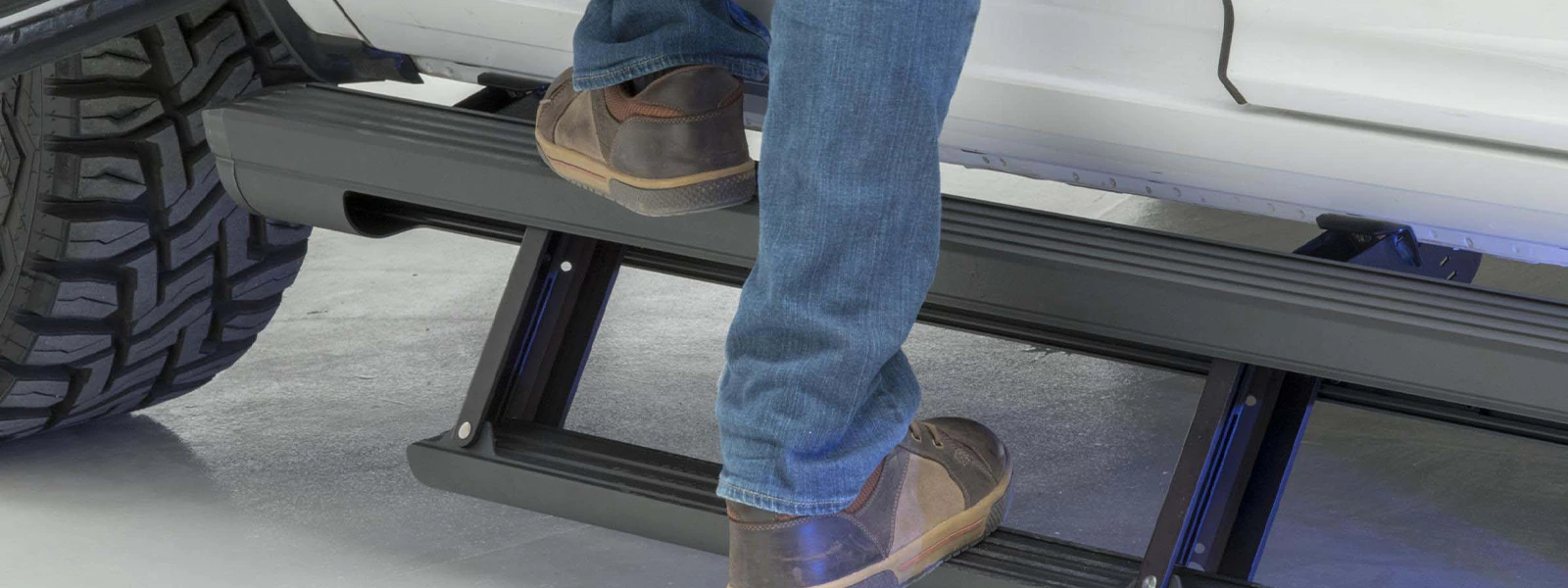
Running boards serve as a convenient step or platform, making it easier for passengers, especially those with limited mobility, to enter and exit higher vehicles such as trucks and SUVs. They provide a secure foothold and assist in overcoming the increased ground clearance.
More Benefits of Installing Running Boards
- Protection for vehicle sides: Act as a barrier, running boards shield the lower body panels of the vehicle from debris, rocks, and road spray. They help prevent damage to the vehicle's paintwork and bodywork caused by road hazards encountered during regular driving or off-road adventures.
- Maintaining a clean vehicle interior: Running boards can be likened to doormats positioned at the entrance of a home. Just like how dirt accumulates on the soles of your shoes as you walk, running boards help remove some of that dirt from your footwear, allowing you to enter your truck with cleaner shoes. By consistently boarding your vehicle with clean shoes, you can significantly reduce the likelihood of your car's interior getting dirty.
- Improve your car's look: Depending on the chosen material, a well-designed running board can be a striking addition that adds to the overall beauty of your vehicle. By carefully selecting the right running board, you can elevate the look of your car, giving it a touch of elegance and enhancing its overall visual impact.
Types of Running Boards
In terms of power source, running boards can be categorized into two main types: electric running boards and traditional/non-electric running boards.
Electric running boards
Electric running boards, also known as power running boards or automatic running boards, are equipped with a motorized mechanism. When the vehicle's door is opened, the running boards extend outward, providing a convenient step for passengers to enter or exit the vehicle. When the door is closed, the running boards retract back underneath the vehicle, offering a streamlined look and improved ground clearance. Electric running boards are controlled by sensors or switches and often come with features like anti-pinch technology for safety. They require electrical wiring and may need professional installation.
Traditional/non-electric running boards
Traditional or non-electric running boards are manually operated and do not have a motorized mechanism. They are typically fixed in place and do not extend or retract automatically. These running boards provide a stable step for entering and exiting the vehicle but lack the automated functionality of electric running boards. Traditional running boards are often made from materials like aluminum, stainless steel, or composite, and can be installed using brackets or mounting kits. They do not require electrical wiring or power source connections.
FAQs
- What is the difference between running boards, side steps and nerf bars?
Running boards are long, flat panels mounted along the sides of a vehicle, offering a wide stepping surface extending the length of the cabin.
Side steps, smaller and more compact, are typically located just below the doors, providing a single step for entry and exit.
Nerf bars, usually round or oval, function similarly to side steps but are often mounted closer to the vehicle's frame or body, offering both functionality and a rugged appearance with tubular steel or aluminum construction.
- Do Running Boards really make a difference?
Running boards can enhance convenience, aesthetics, and protection while providing utility for accessing roof racks, but come with added costs, potential ground clearance issues for off-road driving, and slight impacts on fuel efficiency due to altered aerodynamics, making their worth depend on individual priorities and vehicle usage.
- Can running boards affect gas mileage?
Running boards can potentially affect gas mileage due to increased aerodynamic drag. However, the impact is generally minimal unless the running boards significantly alter the vehicle's aerodynamics. Choose aerodynamically designed or retractable running boards and ensuring proper installation and cleanliness can help minimize any negative impact on fuel efficiency.
- How long does it take to install running boards myself?
Self-installation of running boards typically takes 1 to 3 hours, depending on experience, the specific model, and available tools. Steps involve preparing the vehicle, aligning and securing the running boards using provided hardware, and conducting a functional test.
- How long do running boards last?
Running boards typically last 5 to 10 years or more with proper care, including regular cleaning and maintenance.


