The pioneer of urban SUVs: Toyota RAV4 series history

In 1989, an urban SUV quietly entered people's lives. With its beautiful appearance, practical space and rich configuration, Toyota RAV4 has always occupied an important position in this field.
First generation of Toyota RAV4 1989-2000
In the early 1980s, more and more people began to focus on leisure and short-distance outings. Although the SUVs on the market at that time could meet the loading needs of outings, the design that was biased towards passability made these vehicles unable to meet the needs of consumers in terms of comfort, economy, and handling.
With its keen observation of the market, Toyota realized that consumers needed a new model that was more family-oriented. In short, this should be an "urban SUV" that has the handling and comfort of a sedan, better passability than a sedan, and more fuel-efficient than a full-size SUV.
However, from the meaning of the RAV4 name "Recreational Active Vehicle with 4-wheel drive" (translated as "four-wheel drive leisure sports car"), it can be seen that Toyota's vision for it is not just for off-roading.
In terms of interior, the first generation RAV4, like other models of the same era, did not have overly exaggerated materials and designs, and everything was for practical considerations. But the configuration is luxurious enough, including driver's airbags, adjustable three-point seat belts, etc. are standard.
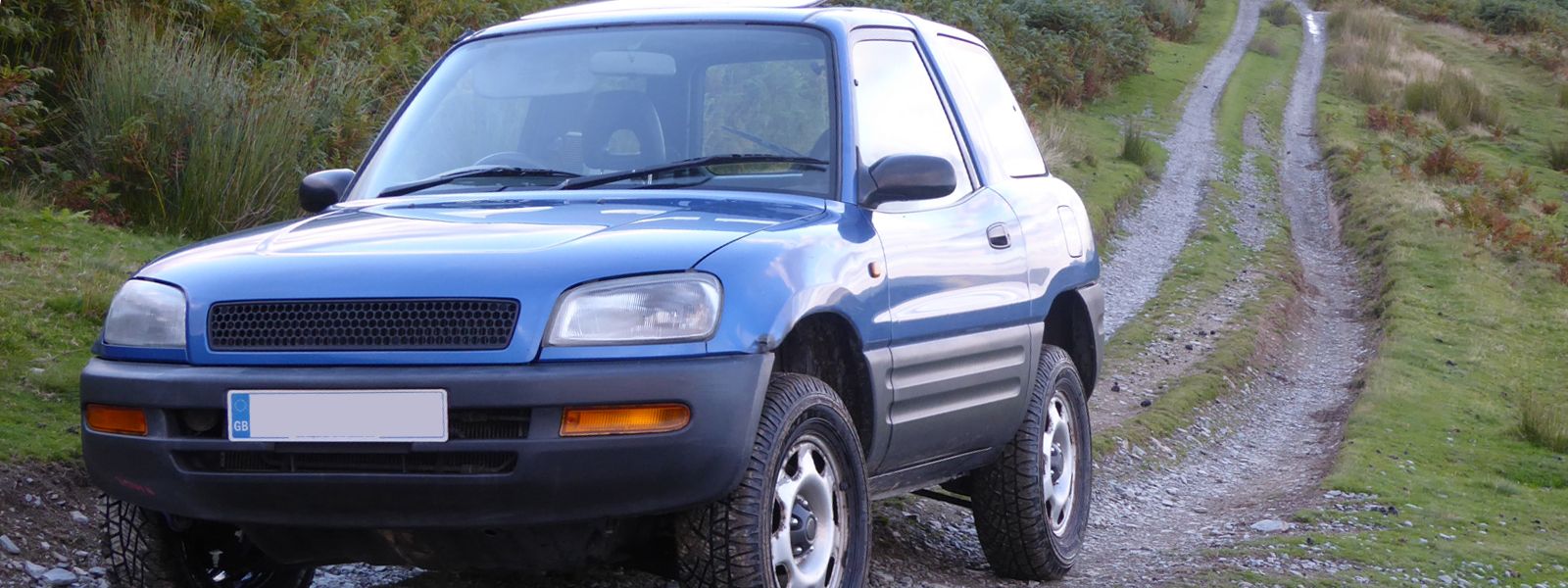
In terms of power, the first-generation RAV4 is equipped with the 2.0L 16-valve four-cylinder engine used by the second-generation Camry, with a maximum power of 89 kW (119Ps), matched with a 5-speed manual transmission and a 4-speed automatic transmission, and also provides two-wheel drive and four-wheel drive (optional differential lock) versions to choose from. It is not difficult to see that even if the RAV4 focuses on urban driving, Toyota still retains a certain off-road capability for it.
In March 1995, the more practical five-door version was also launched on the market. Compared with the three-door version, the new car has a wheelbase lengthened by 400mm to 4140mm. With the larger five-door version, Toyota also let RAV4 start its own "international travel". In 1996, the greatly improved RAV4 officially debuted in the United States. The improved model is equipped with dual airbags in the front row and high-position rear brake lights. At the same time, the engine has been re-tuned to make the engine noiseless and the emissions cleaner.
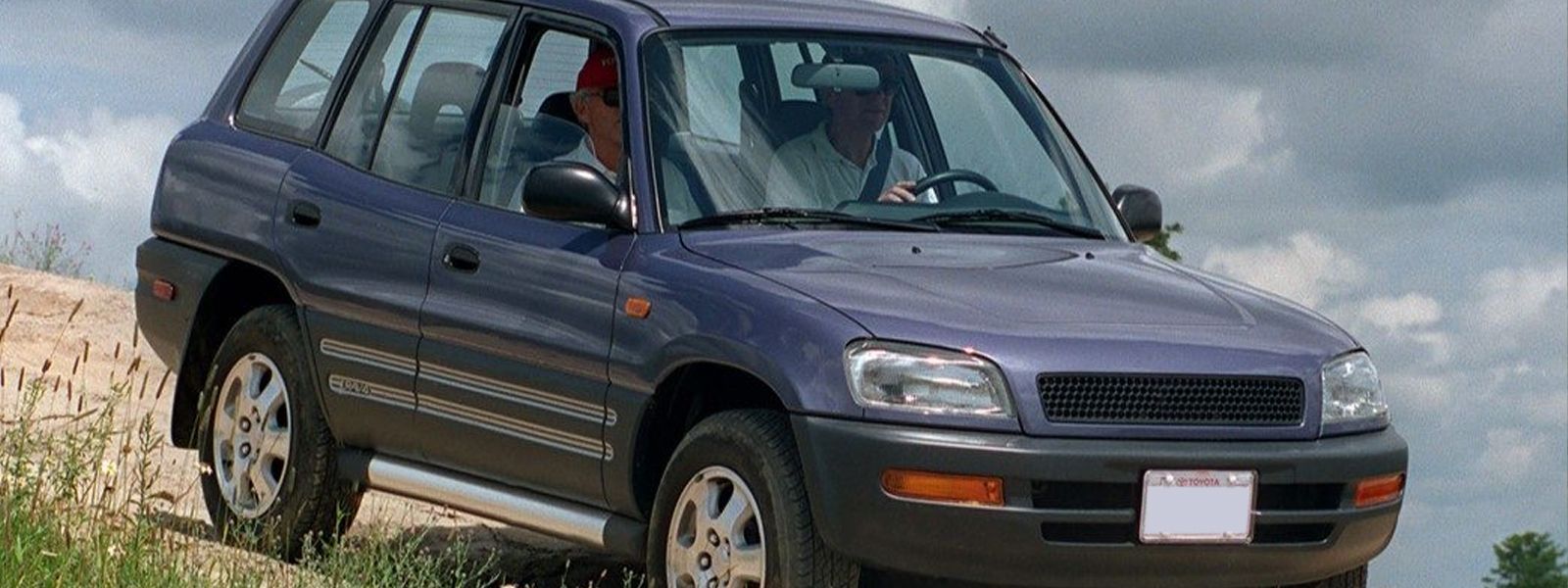
It is worth mentioning that as early as 1997, Toyota launched the pure electric version of the RAV4, namely the RAV4 EV. This car is equipped with a nickel-metal hydride battery with a capacity of 27kWh and a full-charged range of 190km. Toyota also provides a battery warranty of 97,000 kilometers. Combined with the current "big trend" wave, Toyota is indeed very visionary.
In order to better meet market demand, RAV4 was significantly changed again in 1998. The appearance was replaced with a new grille, front bumper, multi-reflector headlights, and crystal taillights. A digital odometer, double cup holders, three-spoke steering wheel, and audio system were added to the car. At the same time, in order to meet the pursuit of individuality by some consumers, Toyota also specially launched a "soft-top convertible version" based on the three-door version of RAV4.
Second Generation Toyota RAV4 2000-2005
In the blink of an eye, we entered the 21st century. With the advent of the new century, the first generation RAV4 gradually began to seem a little "powerless" when fighting with other opponents (especially the Honda CR-V). After being completely redesigned by designers, the second generation RAV4 came to the world in October 2000.
The second generation RAV4 has become rounded and modern in appearance. The trapezoidal air intake grille is matched with a linear light group, which gives this platform an unexpected sense of fashion. In addition, the body lines and rear taillights have also been redesigned. In addition, consumers can also choose wheel eyebrow baffles and integrated fog lights.

In terms of interior, the overall center control area of the second generation RAV4 is designed to be oval, and the position of the control button of the center control panel has been redesigned to be more ergonomic. At the same time, the high-end models of the second generation RAV4 are also equipped with a cruise control system, ABS, six speakers, etc., which are not bad even now.
In terms of power, a new 2.0L four-cylinder 16-valve DOHC engine replaced the old engine. The use of all-aluminum materials makes it lighter, and this engine also has a VVT-i function, with a maximum power of 110kW (150Ps). The transmission part is still a 5-speed manual or 4-speed automatic transmission.
In terms of body size, the length and width of the second-generation RAV4 have increased to 4193mm and 1735mm respectively, but the height has been reduced to 1650mm. The wheelbase has also increased to 2490mm. There are also three-door and five-door models to choose from.
However, in order to take care of the European market, Toyota released the diesel engine version of RAV4 in September 2001, and the three-door and five-door models in the UK were able to choose this engine.
The diesel version of RAV4 uses Toyota's latest 2.0L high-pressure common rail diesel engine technology. Thanks to the output characteristics of the diesel engine, it can output a maximum power of 85kW at 4000rpm and a maximum torque of 250N.m between 1800rpm and 3000rpm. In addition, Toyota has also installed a cooling device in the exhaust gas recirculation system to effectively control the emission of harmful substances.
In the 2004 RAV4, both the appearance and configuration have undergone tremendous changes. The appearance mainly includes a new front bumper, headlights, grille, fog lights, taillights, and spare tire cover design. In terms of configuration, ABS, traction control and vehicle stability system have become standard, and safety equipment such as side air curtains and front-seat side airbags are also optional.
Third-generation Toyota RAV4 2005-2012
In 2005, just a few months after Toyota fully upgraded the second-generation RAV4, the third-generation Toyota RAV4 made its debut at the 61st Frankfurt Motor Show.
The third-generation RAV4 is built on a new platform and also offers two different versions of long and short axles. However, this time the short-axle version is only sold in Japan and Europe, while the long-axle version focuses on the North American, Asia-Pacific and Chinese markets.
However, for the third-generation RAV4, the most interesting thing is the power system. The third-generation Toyota RAV4 launched in the North American market in November 2005 has a total of 2 engines to choose from, including a 3.5L V6 engine and a 2.4L four-cylinder engine. Among them, the 3.5L V6 engine can output a maximum power of 269Ps and a maximum torque of 335N·m. Until now, this is also the most outstanding version in the RAV4 product series.
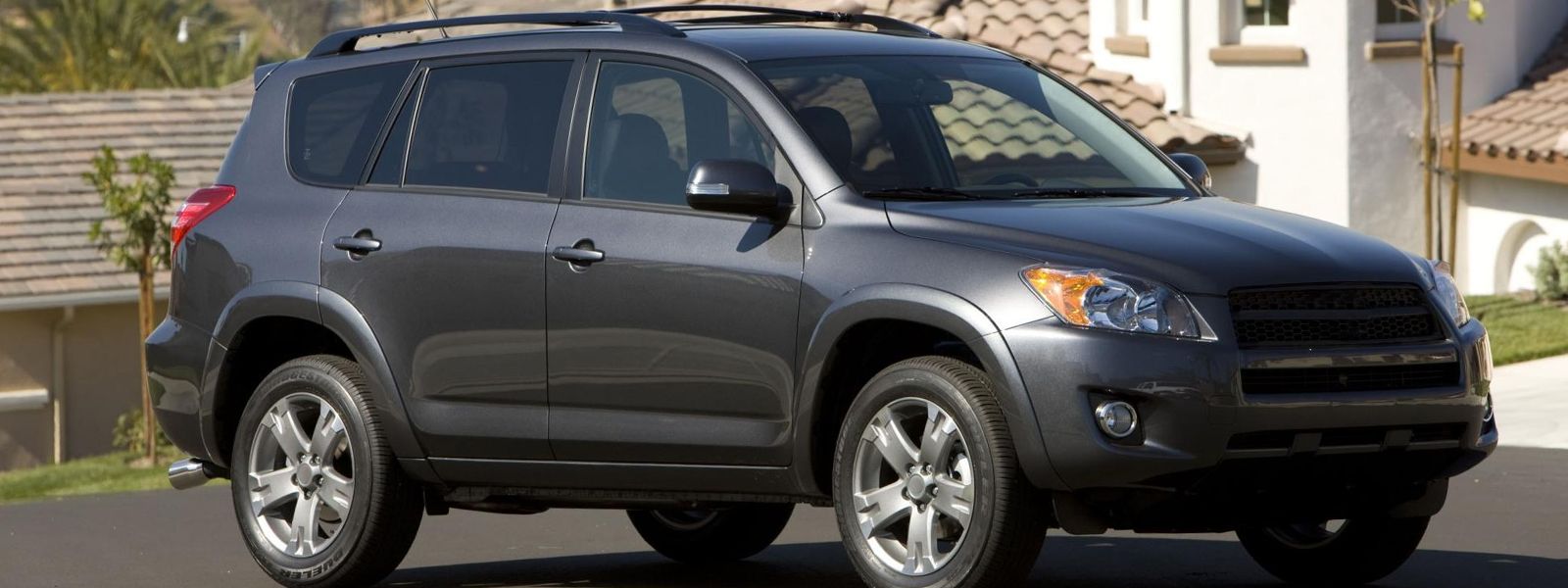
The maximum output power of the 2.4L four-cylinder engine is 166 horsepower and the maximum torque is 224N·m. They are all equipped with a 5-speed manual or 4-speed automatic transmission. As for the European market, Toyota has launched 2.2L naturally aspirated and turbocharged diesel engines. The naturally aspirated version has a maximum output power of 134Ps and a maximum torque of 310N·m. The diesel turbocharged version has a maximum output power of 170Ps and a maximum torque of 400N·m. The transmission system is equipped with a 6-speed automatic transmission.
Fourth-generation Toyota RAV4 2012-2018
In April 2011, the renderings of the fourth-generation RAV4 were exposed overseas. However, the car was officially released at the Los Angeles Auto Show at the end of 2012.
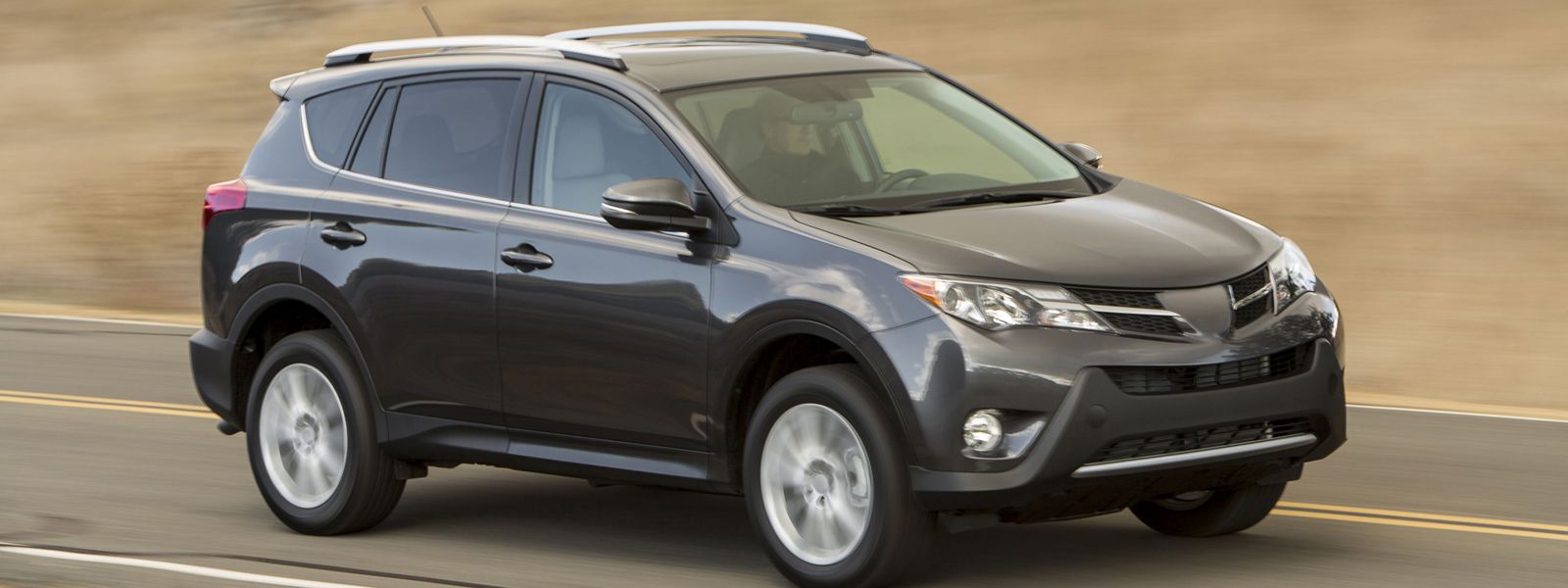
In terms of interior, the fourth-generation model continues to use the layered wave design, and the steering wheel style still uses the popular three-spoke design, but more control buttons are integrated. The lower part of the center console is wrapped in leather, and the style has also changed. The 6.1-inch LCD screen highlights the technological sense of the whole vehicle. The long air-conditioning outlet is integrated on both sides of the LCD screen, and the air-conditioning and other control buttons are recombined and neatly arranged below the LCD screen.
Of course, evolution cannot only stay on the appearance and interior. The fourth-generation RAV4 also spares no effort in safety. Toyota's GOA body uses a wide variety of electronic auxiliary equipment to make the new RAV4 rated five stars in the European crash test. It is safe and easy to drive, which is one of the important reasons for the success of Toyota RAV4.
In terms of power, a new 2.5L inline four-cylinder engine replaces the original 2.4L engine. The maximum output power of the new engine is 130kW (177Ps) and the maximum torque is 233N·m. The new 6-speed manual automatic transmission replaces the 4-speed transmission that has been criticized, and the four-wheel drive model is also equipped with a 4WD system with a DTC dynamic torque distribution control system, but the actual effect is relatively general.
Fifth-generation Toyota RAV4 2018-Present
At the end of 2018, the fifth-generation RAV4 was first launched in the United States.
In terms of exterior design, the fifth-generation model also returns to the hard-core concept, with a clear outline of the tough front shape, and almost every panel of the body has a complex curved surface design, which can be called "hard-core off-road in urban SUVs."
In terms of configuration, the fifth-generation RAV4 is equipped with 7 airbags, a Toyota TSS 2.0 intelligent driving system, one-button lifting of all car windows, full LED headlights, and other configurations as standard. In a sense, it can completely "beat" its old rival Honda CR-V in this regard.
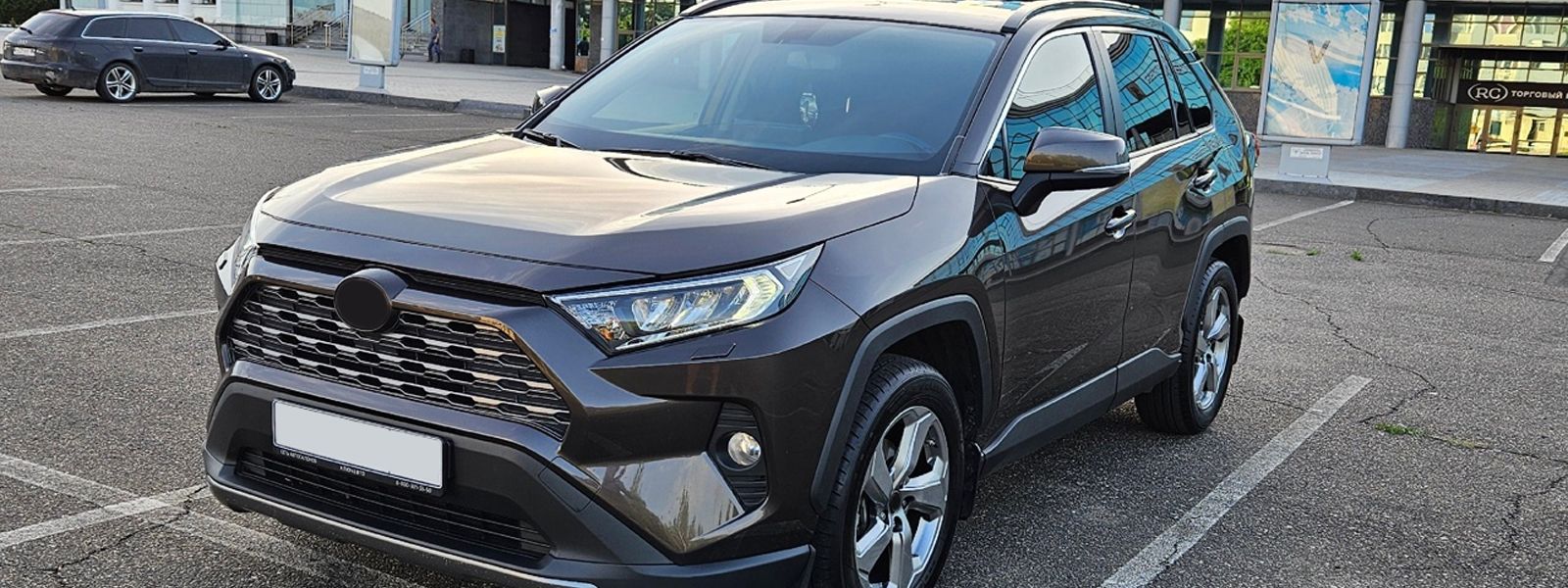
In terms of size, the length, width, and height of the new car are 4600/1855/1680mm respectively, and the wheelbase is 2690mm. Compared with the previous generation, its body width has increased by 10mm, the height has decreased by 10mm, the front wheel track has increased by 35mm, the rear wheel track has increased by 55mm, and the ground clearance has increased by 7mm. The direct benefit brought is a significant improvement in off-road capabilities.
In terms of power, the new car is equipped with a 2.0L naturally aspirated engine and a 2.5L hybrid system. Among them, the 2.0L engine has a maximum power of 171Ps and a maximum torque of 209N·m. It is matched with a Direct Shift CVT gearbox and has a thermal efficiency of up to 40%. It is the self-priming engine with the highest thermal efficiency so far.
The 2.5L hybrid system has a combined power of 222Ps, a maximum torque of 221N·m, and a transmission system matched with an E-CVT gearbox. It is no exaggeration to say that, apart from Honda's iMMD hybrid system, the hybrid technology used by the fifth-generation RAV4 is almost invincible at the moment.
Since the fifth-generation RAV4 means "powerful and precise four-wheel drive vehicle", it is natural that it has to have a certain level in terms of four-wheel drive. The current RAV4 is equipped with three different four-wheel drive systems according to different models, namely the fuel version of DTC (dynamic torque control) and DTV (dynamic torque vectoring), and the dual-engine version of the E-Four electronic four-wheel drive system.


