The founder of hybrid technology - the history of Toyota Prius

With the United Nations Conference on the Human Environment held in 1992, the development of environmentally friendly cars was put on the agenda of Toyota in the face of "sustainable development".

In January 1992, Toyota issued the Toyota Earth Environment Charter, which is the general program formulated by Toyota Motor Corporation on the basic policy, action guide, and participation system of participating in environmental protection. The aim is to solve the growing problem of environmental pollution and energy shortage, and Toyota is trying to change its dependence on traditional gasoline engine models.
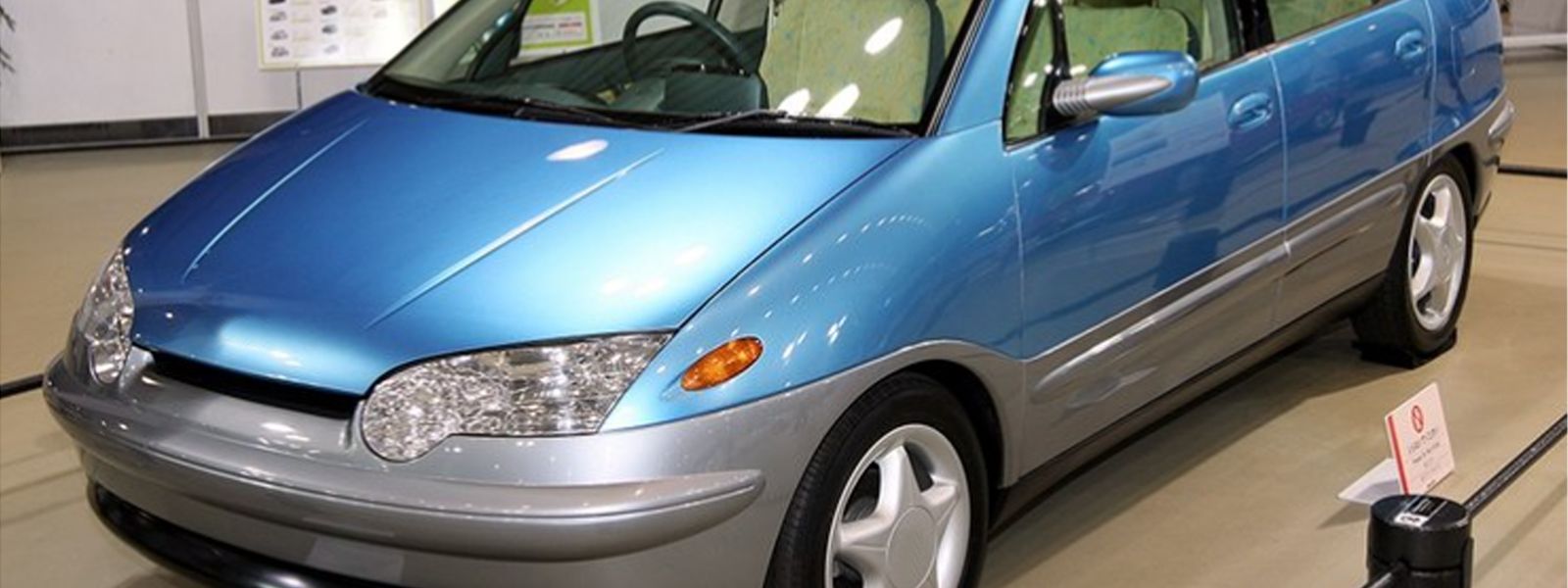
First generation Prius from 1997 to 2003
In September 1993, Toyota Yoshirio Kimbara, executive vice president of research and development, launched the G21 project. In 1994, Toyota gathered ten technical elites in their 30s from various fields, including body, chassis, engine, and production technology, to form the G21 project team. The team aims to build a new model that is beneficial to resources and the environment but retains the essence of modern cars. At the 1995 Tokyo Motor Show, Toyota unveiled a hybrid concept car called the Prius, which means Prior (preferred, advanced) in Latin.
Early Prius configuration and the general Japanese family car, manual air conditioning, electric Windows, flannelette seats, cruise control, the front airbags and side airbags, as a fuel with low emissions for a family car, these configuration is enough, former McPherson, after torsion beam independent suspension is a common Japanese family car suspension form. The first Prius sold for 2.15 million yen in Japan, compared with 1.527 million yen, AE 110 at the same time.
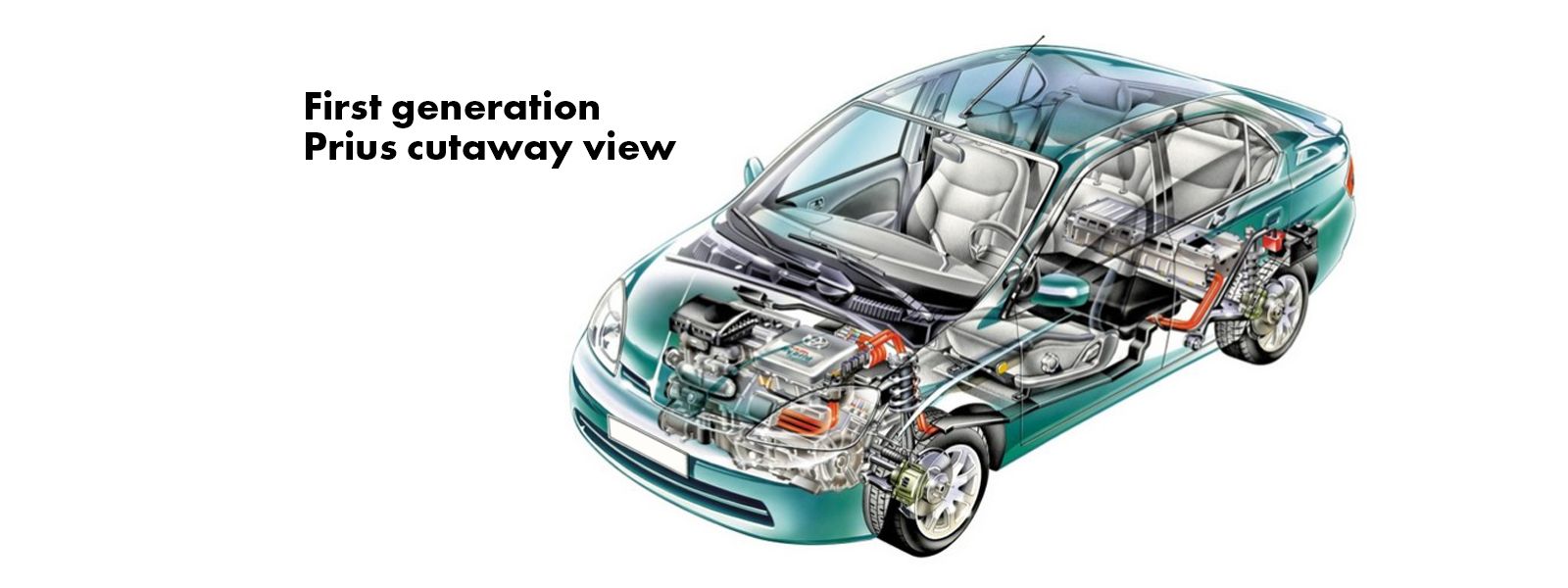
The first generation Prius is equipped with a 1.5-liter in-line four-cylinder naturally aspirated engine named 1 NZ-FXE and a 288V permanent magnet AC motor. The gasoline engine has a maximum power of 58 HP, a maximum torque of 102 N·m, a maximum power of 29kW (about 40 HP), a maximum torque of 305 N·m, and is equipped with ECVT (electric stepless transmission) transmission, nickel metal hydride (nickel metal hydride) battery pack as the power source, Toyota called this oil-electric hybrid system "THS", namely Toyota Hybrid System. In terms of the cost of hybrid systems and batteries alone, the first Prius is very sincere.
The fuel consumption of the first-generation Prius is outstanding. Before the launch, the official fuel consumption of the new car is 28km / L (about 3.57L / 100km). After continuous product improvement, the measured fuel consumption of the commercial car after the final mass production is 31km / L (about 3.22L / 100km), and the fuel consumption performance is fully in line with Toyota's expectations.
In order to meet the needs of European and American consumers' demand for high-speed and long-distance driving, the Prius export model's performance improved, the original 1.5-liter (1 NZ-FXE) four-cylinder engine joined the VVT-i variable timing valve technology, maximum power to 76 horsepower, maximum torque to 110N·m,273.6V motor maximum power to 44 horsepower, motor maximum torque to 350 N·m. After the first Prius successfully entered the US market, Prius became the second mass-produced hybrid model after the Honda Insight.
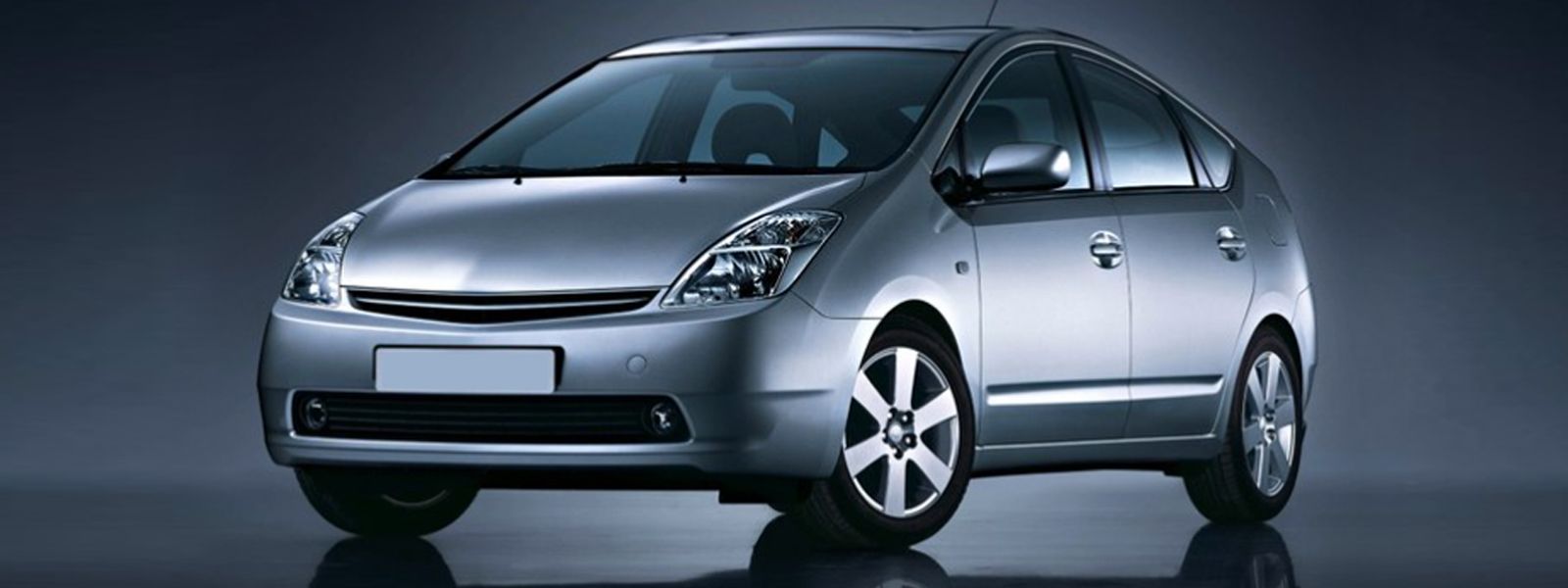
Second generation Prius from 2003 to 2011
With the successful success of the first Prius, the global sales of 123,000 units have given Toyota the hope of gaining hybrid models, and the development of its successor has been on the agenda. Perhaps because of the mediocre appearance of the first generation, designer Hiroshi Okamoto turned the second generation Prius into a memorable model, at least with a unique design that will give you some deep memories.
Considering that to build the Prius into a world-class hybrid model, Toyota abandoned the design concept of the previous generation of three-box models, and the more practical five-door hatchback shape became the biggest feature of the second-generation Prius. Bright appearance is naturally matched with the same personality of the interior design, the second generation of Prius in this respect can be said to be both inside and outside repair. When you first get in the car, you're sure to say, " Wow!"Indeed, in those days, the Prius interior had a futuristic technological feel. It is also a central instrument panel, but the designer deliberately elongated the projected digital instrument panel, and the larger and better resolution LCD screen can display a wealth of gas-electric hybrid system condition information.
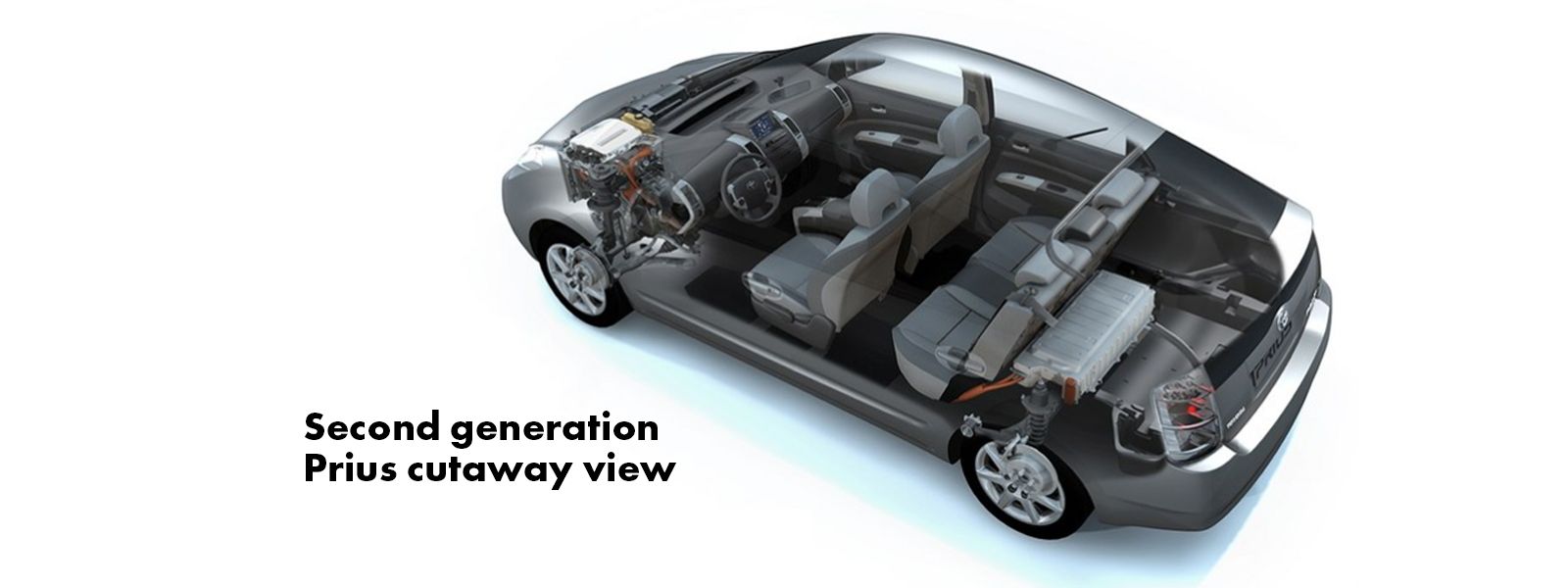
The second generation Prius is still from the Toyota MC platform and uses the 1.5-liter four-cylinder naturally aspirated engine code 1 NZ-FXE, which has VVT-i variable timing valve technology, maximum power of 77 HP, maximum torque of 115 N·m, 500V motor maximum power of 50kW (about 68 HP), a maximum torque of 400 N·m, hybrid net power of 112 HP, equipped with an ECVT stepless transmission. When the gasoline engine and the electric motor run at the same time, the 0-100 km/h acceleration time is 9.7 seconds, and the acceleration time in pure electric mode is about 11 seconds. To boost power output, Toyota has equipped the second-generation Prius with an all-electric air-conditioning compressor, in addition to an electric steering system
With all the technical improvements, how does the second-generation Prius perform in terms of fuel economy? The official theoretical fuel consumption is 35.5km/L (approximately 2.82L / 100km). In front of such excellent fuel consumption data, no matter what group of car fans you are, you may have to look down at the thickness of your wallet to decide what car to buy.
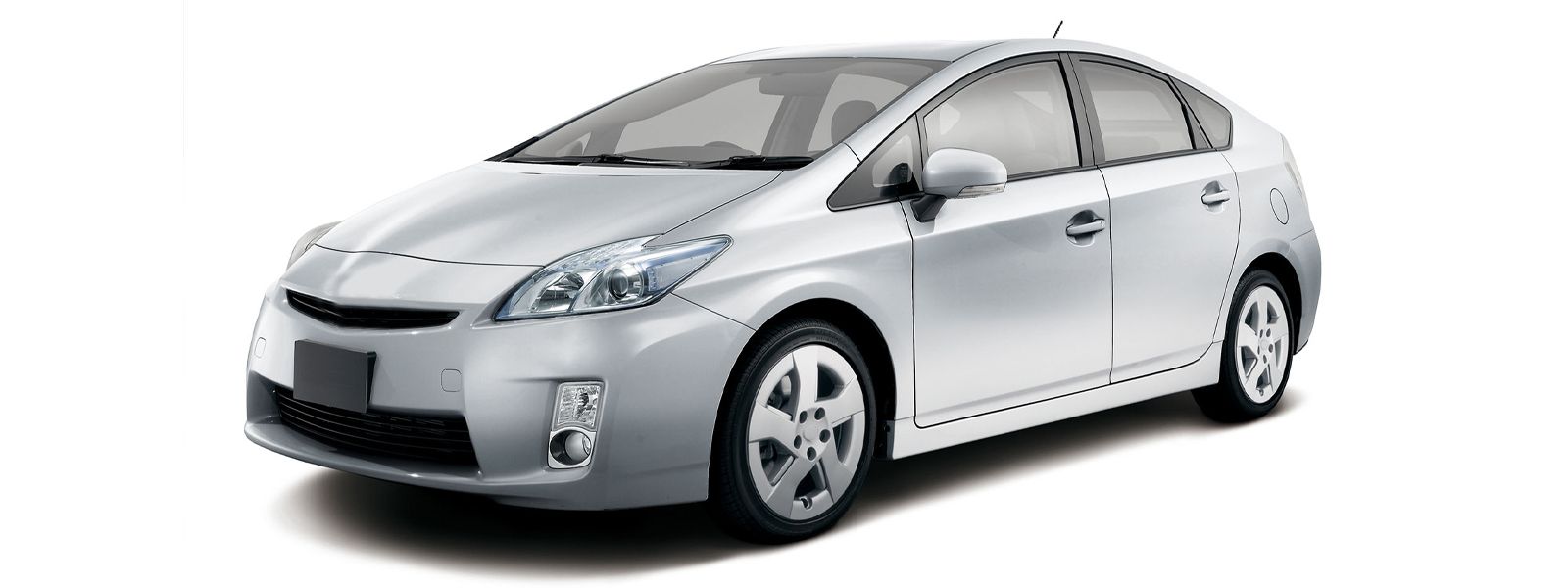
Third generation Prius from 2009 to 2017
In May 2009, the third-generation Prius named ZVW 30 was officially launched in Japan and launched in North America in late May.
The third generation Prius follows the styling design of the previous generation model. Compared with the cute front face of the previous generation model, the third generation Prius face finally looks a little more fashionable, and the focus is thanks to the more flexible headlight styling design. The wheelbase of the Prius is still 2700mm, and the length of the vehicle is 4480mm, width 1745mm, and height 1480mm.
Although continuing the overall shape of the previous generation of Prius, but the third generation of Prius interior design has had a qualitative leap forward. The central console is distinct, and the suspension design of the functional area has a sense of science and technology. It is worth mentioning that the shift lever is finally far away from the steering column area, and was placed in the conventional position, the shift lever design sense is still very tall. The storage space is also richer, and the co-pilot double glove box is retained.
Toyota has created more than 100 patented technologies while developing the third-generation Prius. The third-generation Prius uses electronic water pumps, making it the first production model to use a belt drive, and the new inverters, motors, and other hybrid parts are smaller and 20 percent lighter than the previous model, boosting the fuel economy. The official theoretical fuel consumption is 38km / L, which is about 2.63L / 100km.
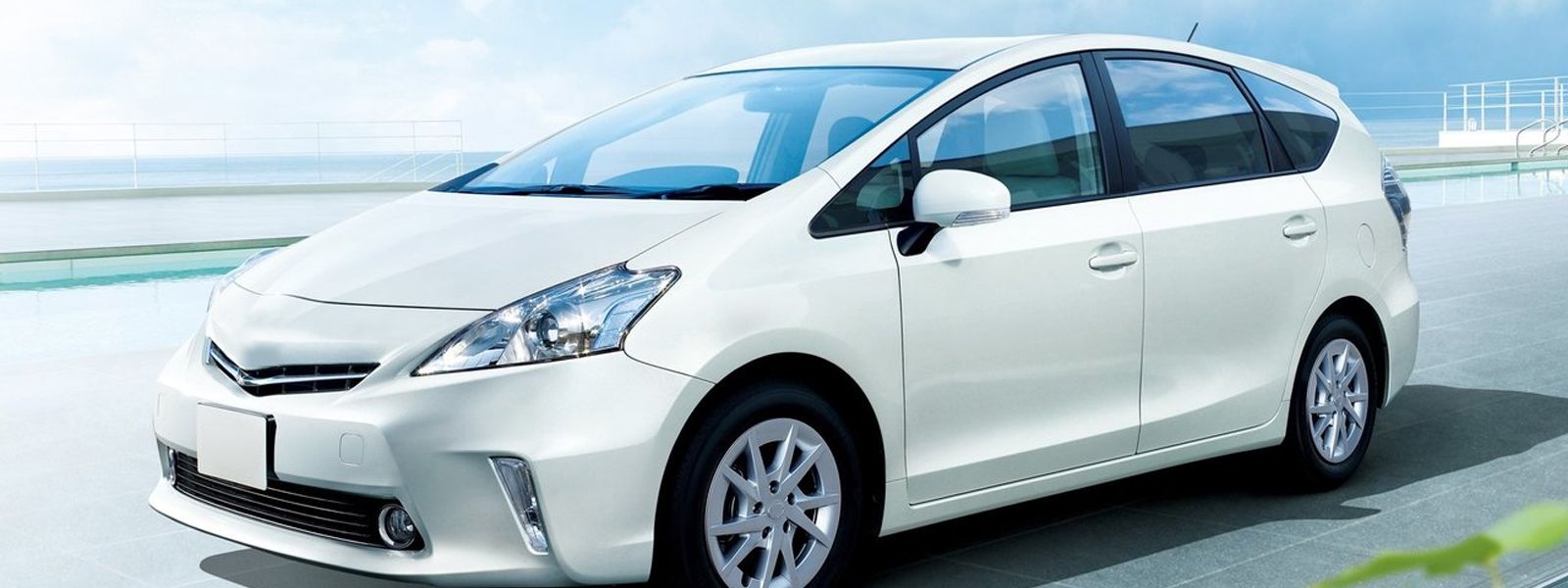
In order to further fill the gap in the hybrid model market segment and consolidate its position in the hybrid model sector, Toyota released the concept car called Prius C at the 2011 North American Auto Show, c represents the city, as the name suggests, is more suitable for urban transportation hybrid model. In 2012, the Prius C was officially launched, a hatchback car based on the gasoline version of the Toyota Aqua, which is the third model in the Prius family after the Prius MPV version.
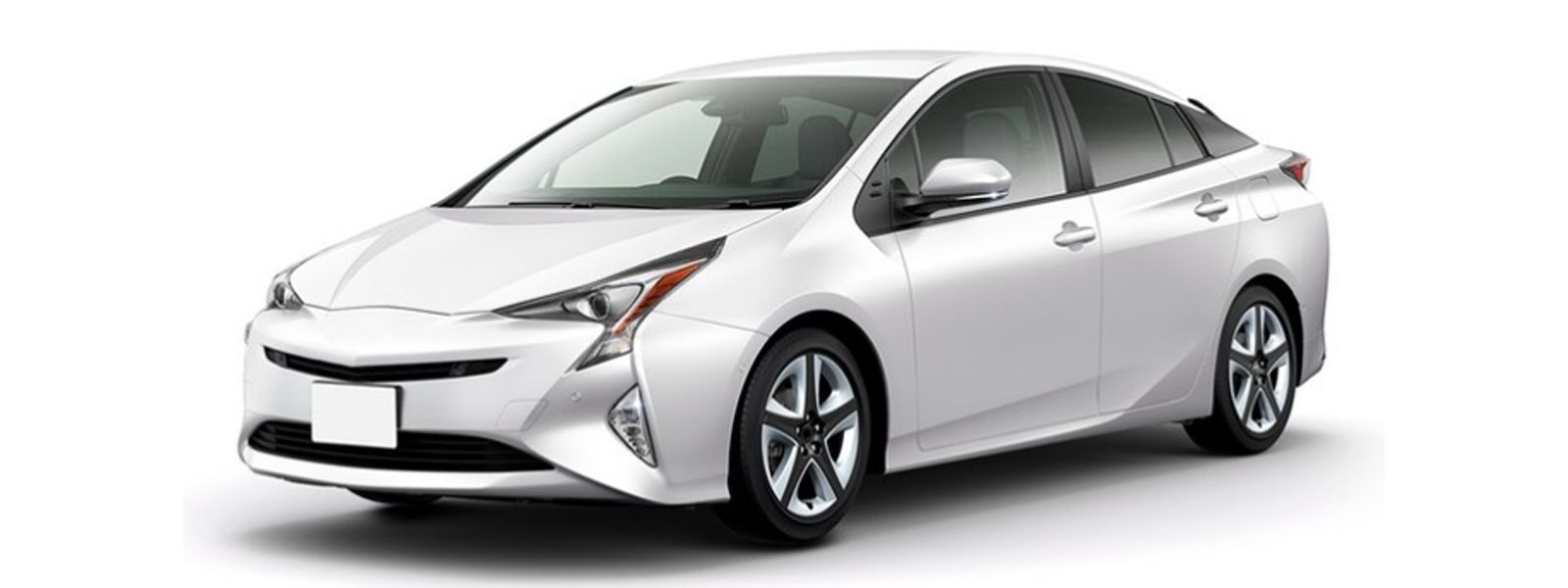
Fourth generation Prius from 2015 to present
In September 2015, the fourth generation of Prius was publicly unveiled in Las Vegas World, Nevada. Why wasn't it the first to launch in the Japanese home market? The United States has become Prius's most important market.
The fourth generation Prius has yet to break the overall styling of the previous two generations, but under the inspiration of Toyota designers, the styling has shed the long impression of an MPV. The upward waistline combined with the current popular floating roof gives the new generation of Prius a stronger sense of technology. The unique taillight style merges perfectly with the rear spoiler, and the Prius's classic split rear window continues. The fourth generation of Prius is 4,540 mm long, 1,760 mm wide, 1,470 mm high, and the wheelbase still remains at 2,700 mm. According to different models, its vehicle weight is 1,310 kg to 1,460 kg.
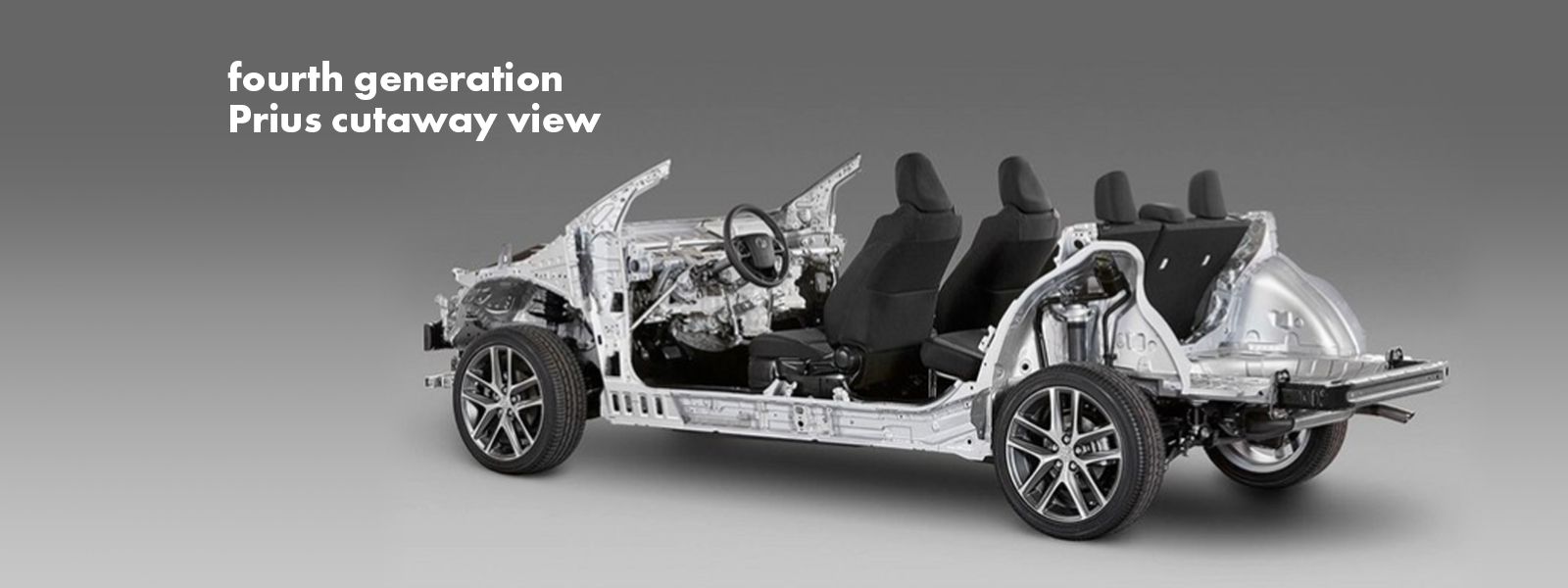
In addition to the usual features, the fourth-generation Prius features a head-up display, automatic parking, front seat heating, and wireless charging. In addition, the fourth-generation Prius has more active safety features, with the TSS (Toyota Safety Sence) system including active braking, collision warning, lane departure warning, and adaptive cruise. It is worth mentioning that the fourth generation Prius still uses the former McPherson independent suspension, but the rear suspension has been upgraded to a double-fork arm independent suspension, and handling and comfort will be further improved.
Thanks to the larger battery pack, the fourth-generation Prius will improve the range in pure electric mode, and the standard precursor Prius will have a fuel consumption of 37.2km/L, about 2.69L / 100km. If you are not rich enough to choose to buy a big low with Prius, then congratulations, poor also has the benefits of being poor! The 1,310 kg car weight will bring you an ultra-low fuel consumption of 40.2km/L, about 2.48L / 100km. Is it very exciting?


