Decoding the P0430 Trouble Code: Understanding and Resolving Catalytic Converter Efficiency Issues

Discover the key insights to deciphering the P0430 Trouble Code in our blog post. Gain a deeper understanding of catalytic converter efficiency issues and uncover effective strategies for diagnosing and resolving them.


You are driving down the highway when a sudden drop in engine power catches your attention. Your vehicle feels sluggish during acceleration, the idle turns rough, and then it happens—the dreaded check engine light illuminates on your dashboard. When you hook up an on-board diagnostics (OBD-II) scan tool to the device port under your steering wheel, the screen flashes a specific code: P0430.
Unlocking the meaning behind this code is the first step toward saving your fuel economy, protecting the environment, and avoiding a massive repair bill down the road.
What Does the P0430 Diagnostic Trouble Code Mean?
The P0430 diagnostic trouble code stands for Catalyst System Efficiency Below Threshold (Bank 2). In plain English, your vehicle’s engine computer has noticed that the catalytic converter on the second bank of the engine is no longer doing its job efficiently.
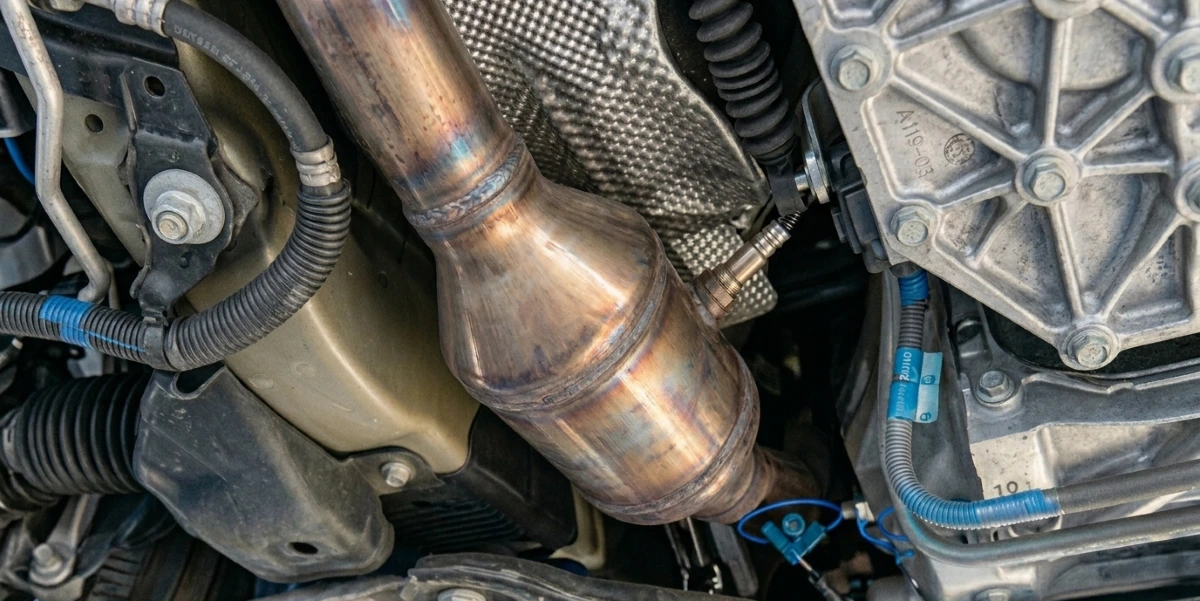
To fully grasp this concept, you have to look at the chemistry of the exhaust system. Modern automobiles utilize a three-way catalytic converter designed to dramatically reduce the output of harmful environmental pollutants. As toxic gases like carbon monoxide, unburned hydrocarbons, and nitrogen oxides (commonly referred to as NOx by the EPA) flow out of the exhaust manifold, they pass through the converter.
Inside the converter, a honeycomb ceramic substrate coated with precious metals like platinum, palladium, and rhodium acts as a chemical catalyst. When the exhaust gas hits this structure, a chemical reaction is accomplished: it breaks down the toxic components into harmless carbon dioxide, nitrogen, and water vapor.
However, there is a fundamental rule to this process: catalytic converters require a high operational temperature—specifically above 400 °C (750 °F)—to operate effectively. Because of this temperature dependency, vehicles emit the majority of their pollution during the first five minutes of driving before the unit gets hot. If the unit fails to reach or maintain this high-efficiency state, the catalyst system efficiency drops, and the onboard computer logs the fault.
What Is the Difference Between Bank 1 and Bank 2 on an Engine?
When troubleshooting a P0430 code, spatial awareness of your engine bay is critical so you don’t replace the wrong parts.
-
Bank 1 always refers to the physical side of the engine block that contains cylinder number one. If your scan tool reads a P0420 code (which mirrors P0430 but for the opposite side), you are dealing with Bank 1.
-
Bank 2 refers explicitly to the side of the engine that does not contain cylinder 1. This applies specifically to V6, V8, or horizontal-opposed engine configurations. On a standard inline-4 engine, there is typically only one bank, meaning a P0430 code is rare unless the vehicle uses a dual-manifold design.
Can You Drive a Car with a P0430 Code?
Yes, you can safely continue driving your car for short distances when a P0430 code is present. Because it signifies a decrease in emissions chemistry rather than an immediate mechanical breakdown of your tires, steering, or braking, it is not a direct threat to your immediate safety on the road.
However, treating the code as a low-priority issue is a risky gamble. While the code indicates irregular catalytic converter performance, the underlying cause can create a cascading chain reaction of severe mechanical failures. If a clogged catalytic converter is ignored over time, exhaust backpressure will rise dramatically. This restriction restricts engine airflow, causing engine stalling, severe loss of power, and potential engine damage like blown head gaskets or warped valves.
Furthermore, if you reside in an area where local governments mandate vehicle emissions testing to protect the environment, a active P0430 code will result in an immediate automatic failure, potentially subjecting you to hefty registration fines or illegal operation penalties.
What Are the Most Common Symptoms of a P0430 Code?
While the glowing check engine light on your dashboard is the most prominent flag, a failing catalyst system will produce several secondary performance symptoms that a driver will notice:
-
Sluggish Acceleration: The engine struggles to breathe or accelerate dynamically due to restricted exhaust pathways.
-
Reduced Fuel Efficiency: The vehicle’s computer changes the air-to-fuel mixture to compensate for poor sensor data, consuming significantly more fuel per mile.
-
A Loud Metallic Rattling Noise: If the precious metal internal honeycomb structure inside the unit fractures due to road impact or sudden temperature shock, it will produce a distinct rattling noise at idle or when you tap the gas pedal.
-
A Rotten Egg/Sulfur Odor: When a converter becomes old or fails to reach its 400 °C thermal operating zone, it cannot properly process sulfur compounds, creating a strong smell out of the tailpipe.
What Triggers the P0430 Trouble Code?
A systematic approach to diagnosing the root cause is mandatory because a simple parts-cannon replacement can cost you thousands of dollars in wasted money. The P0430 code can be triggered by several distinct system defects:
1. Defective Catalyst Chemistry (Faulty Catalytic Converters)
Over long cycles of normal wear and tear, the internal coating of precious metals degrades naturally. When the platinum and other catalyst elements can no longer convert the target volume of gases, the code triggers.
2. Upstream Engine Misfires
This is the number one killer of converters. When an engine spark plug or ignition coil fails, it allows unburned raw fuel to escape the combustion chamber and travel straight down the exhaust stream. When this raw fuel hits the incredibly hot surface of the converter, it ignites right on the ceramic honeycomb. This can cause the internal matrix to overheat instantly, melting the core block and rendering it entirely useless.
3. Faulty Oxygen Sensors
Vehicles rely on two specialized sensors to measure efficiency. The upstream oxygen sensor reads the raw exhaust coming out of the engine, while the downstream oxygen sensor monitors the air chemistry leaving the converter. The vehicle computer compares these two readings. If the downstream sensor fails, has broken wiring, or sends an erratic voltage signal, it will trick the computer into generating a false P0430 code.
4. Hidden Exhaust Leaks
Even a tiny pinhole leak or rusted gasket located in the exhaust piping before the converter can pull outside air into the system. This extra air corrupts the downstream oxygen sensor voltage readings, confusing the computer into flagging a catalyst failure when the converter itself is perfectly functional.
5. Engine Oil or Coolant Consumption
Internal engine mechanical issues—such as worn piston rings or a leaking cylinder head gasket—will allow engine oil or antifreeze to be burned during combustion. The chemical ash from these fluids coats the precious metal surfaces inside the cat, isolating them from the exhaust gas and stopping the conversion process completely.
How Do You Diagnose and Fix a P0430 Code?
Because replacement catalytic converters represent a substantial financial investment—a cost driven up by their value in global recycling markets, which unfortunately caused a historic surge to 153,000 converter thefts in the U.S. in 2022—you must thoroughly diagnose the problem before buying new parts.
Follow this field-tested diagnostic sequence to locate and fix the issue correctly:
Step 1: Perform a Comprehensive Visual Inspection
Jack up the vehicle safely and check the entire length of the exhaust pipeline. Look closely for dark soot marks that reveal an exhaust leak, structural cracks in the exhaust manifold, or advanced sheet-metal rust. Repairing simple exhaust leaks early is a cheap fix that can instantly restore correct sensor parameters.
Step 2: Use Advanced Live-Data Diagnostic Tools
Connect an OBD-II scanner capable of showing real-time sensor graphing data. Run the engine until it reaches its normalized temperature profile. Monitor the voltage waveforms of both the upstream and downstream oxygen sensors.
-
An efficient setup will show a rapidly fluctuating upstream sensor wave and a steady, flat downstream line.
-
If the downstream sensor voltage mimics the rapid switching pattern of the upstream sensor, the converter is dead and requires replacement.
Step 3: Check for Accompanying Codes
Always address engine misfires (P0300-P0308 codes) or fuel trim problems (P0171/P0174 codes) before blaming the converter. If you replace the unit without fixing a underlying misfire, the raw fuel will destroy your new components within a matter of days.
Troubleshooting FAQ
Which is better for a replacement: an OEM factory unit or an aftermarket converter?
An OEM (Original Equipment Manufacturer) unit is always the most secure choice for longevity and exact compliance with emissions regulations, particularly if you live under strict EPA or CARB guidelines. However, factory replacements are notoriously expensive compared to aftermarket choices. High-quality aftermarket units offer incredible value, but you must ensure the part is explicitly listed as compliant with your specific vehicle make, model, and regional emission standards to avoid setting off the dashboard light again.
Are cheap aftermarket options completely untrustworthy?
No, reputable aftermarket brands are completely safe and reliable options for older vehicles or drivers working on a strict budget. The key is sourcing parts from recognized automotive supply chains rather than unbranded online marketplaces. Be aware that ultra-budget units often contain lower concentrations of precious metals like platinum, meaning they may have a shorter operational life compared to premium components.
Why does the P0430 light stay on after installing a brand-new converter?
If you completed a new unit installation and the trouble code returns, it generally means the root cause of the failure was never addressed. An undetected exhaust leak before the sensor, a faulty oxygen sensor, or corrupted wiring connections can continuously trick the engine computer into flagging the efficiency code. Always check your vehicle manufacturer's factory service reference guide to ensure all system adaptation values are reset after installing new components.


