Is Your Shock Absorber Leaking? Here's How to Tell if You Need a Replacement

Is that oily grime on your shock absorber a minor "mist" or a major safety risk? This guide breaks down how to determine if your vehicle shock absorbers are failing and why ignoring a leak can interfere with your braking and steering control.


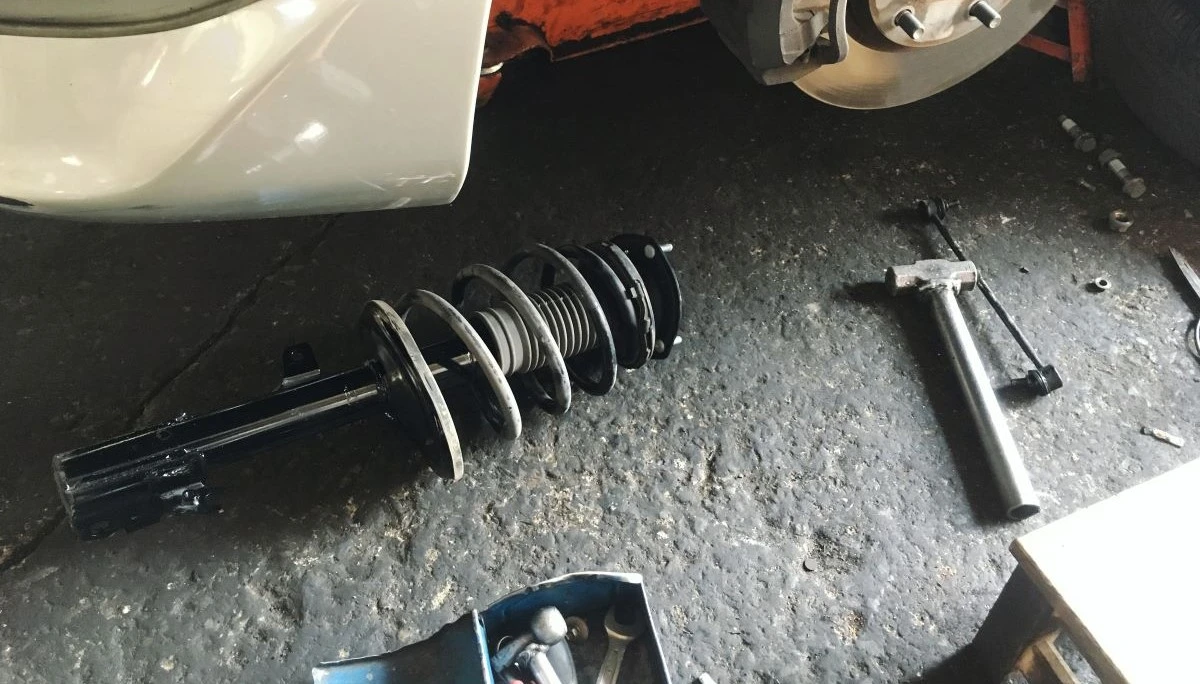
We’ve all seen it: a mysterious oily grime coating the side of your vehicle shock absorbers. For many drivers, the immediate reaction is panic. Does a little oil mean your suspension system is failing? Is your safety at risk every time you hit the highway?
The short answer is: It depends. In the world of automotive maintenance, there is a big difference between a light "sweat" and a catastrophic leak. If you’ve been wondering, "How do I know if mine is bad?" this guide will help you understand the meaning behind the mess and determine if it’s time to brake for repairs or keep on rolling.
Introduction to Vehicle Shock Absorbers
Vehicle shock absorbers are the unsung heroes of your car’s suspension system. Also known as dampers, these components are responsible for creating a stable environment by controlling the up-and-down movement—oscillations—of your vehicle as you drive over bumps, potholes, or rough terrain. By converting the kinetic energy from these shocks into heat, which is then dissipated, shock absorbers reduce unwanted bounce and vibration, delivering a smooth, safer ride.
Choosing the correct fit ensures your vehicle maintains optimal contact with the ground, improving traction and stability, especially during sudden maneuvers. There are different types available, with twin tube shocks and monotube shocks being the most common. Twin tube shocks are widely used in passenger cars for their balance of comfort and durability, while monotube shocks are often favored for performance and off-road applications due to their superior responsiveness.
To learn more from our introduction to shock absorbers, please read: What is Shock Absorber in Car, What Does A Shock Absorber Do | A-Premium
The "Mist" vs. The "Leaker": Is It Really Broken?
It is a common research finding that shock absorbers typically exhibit some moisture. In the industry, this process is called "misting."
-
Misting (Normal): A very thin film of oil mixed with road dust. It looks like a dull, dark smudge on the shock body. This is caused by the internal seals doing their job—self-lubricating the piston rod as it moves.
-
Leaking (Bad): If you see wet, dripping oil that has streaked down the side of the vehicle, or if the oil is thick enough to form droplets, the internal gas or hydraulic fluid is escaping.
-
Why it matters: Once the internal fluid is gone, the shock absorbs zero energy. Instead of a smooth ride, your coil spring will handle all the vibration, leading to a dangerous bounce that interferes with your control.

How to Know if Mine is Bad? (The DIY Diagnostic)
You don't need a professional instrument or a racing background to determine the health of your front end. You can hear and feel the signal your car is sending.
The Visual Inspection
Grab a light and look into the wheel well of your passenger cars.
-
Check the Boot: Look at the rubber dust cover. If it’s torn, debris is likely entering the system.
-
Look for Fluid: As mentioned, actual liquid oil is a major red flag.
-
Check the Tires: Look for a "cupping" or "scalloping" pattern. If the shock isn't keeping the tire in contact with the ground, the tread will wear unevenly.
The "Bounce Test"
This is a classic machine-free test used by customers and mechanics alike for decades.
-
Go to the corner of your vehicle.
-
Push down with all your energy on the fender or bumper.
-
Let go.
-
The Result: A healthy suspension should bounce once and return to its original position. If it continues to oscillate, your shocks have lost their dampening quality.
Why You Shouldn't Ignore a Leaking Shock
It’s tempting to ignore a loud sound or a bit of oil, especially if you mainly drive on city streets. However, a failed strut or shock creates a domino effect of risk:
-
Increased Braking Distance: When you hit the brake, the weight shifts forward. Bad shocks allow the nose to "dive," which typically increases your stopping distance.
-
Steering Interference: Worn components interfere with your steering response. In an emergency, your vehicle might not act as quickly as you need it to.
-
Damaged Tires: Replacing a set of stock tires is much more expensive than the cost to replace shocks.

The Verdict: Repair or Replace?
Typically, vehicle shock absorbers cannot be "repaired" or refilled. Once the internal seal is compromised, the unit is toast and requires a full replacement.
Do I Have to Replace Both?
Yes. The advantage of replacing them in pairs (both front or both rear) is essential balance. If your right shock absorber is leaking, you should replace the left one as well. The variation in dampening amplitude between a brand-new unit and an aged one will make passenger cars feel unstable during cornering and braking. It’s like substituting one shoe for a taller one—it interferes with your freedom of movement and safety.
Don't Forget the Mounts
When you finally decide on a replacement, research shows you should always inspect the rubber mounts and bushings. These parts handle the high-frequency vibration that even a premium metal shock body cannot filter alone.
Upgrade Your Ride with A-Premium Quality
Familiar brands like Monroe have set the standard for years, but A-Premium is defining the future of suspension technology. At A-Premium, we’ve engineered our vehicle shock absorbers to deliver a superior driving experience through advanced technology:
-
High-Performance Damping System: Precision-tuned to absorbs road energy and control unwanted bounce instantly.
-
Built for High Pressure and Temperature: Whether you're racing or hauling, our shocks maintain consistent force under extreme stress.
-
Long-Lasting Sealing System: Prevents the gas and oil leaks that typically lead to premature failure.
-
Corrosion-Resistant Finish: A durable coating that protects the front end against road salt and moisture.
-
On-Road and Off-Road Capable: Rugged durable construction that provides a smooth ride on city streets and maximum durability off-road.


The A-Premium Advantage: Shopping with Confidence
Choosing A-Premium isn't just about the parts; it’s about the assistance and peace of mind you receive as a customer:
-
90-Day Free Returns: We stand behind our quality. If it's not the right shock absorber, we've got you covered.
-
Free & Fast Shipping: Get your vehicle back on the ground faster with our rapid delivery network.
-
24/7 Online Customer Support: Our team is always available to deliver expert assistance whenever you need it.

Pay attention to your vehicle's health—it is the core of responsible ownership. Just as kids lose their baby teeth to make room for stronger ones, your car needs the right shock absorber to maintain its safety and ride quality.
Has your car been making noise or riding a bit rough lately? Don't let it interfere with your life. Visit our website today to browse our inventory and experience the benefits of a smooth, A-Premium ride.


