How to Test an Ignition Coil at Home: DIY Misfire Diagnosis

This guide explains how to test an ignition coil at home using simple DIY methods, including scanning misfire codes, visual inspection, the coil swap test, spark plug inspection, and basic multimeter checks.
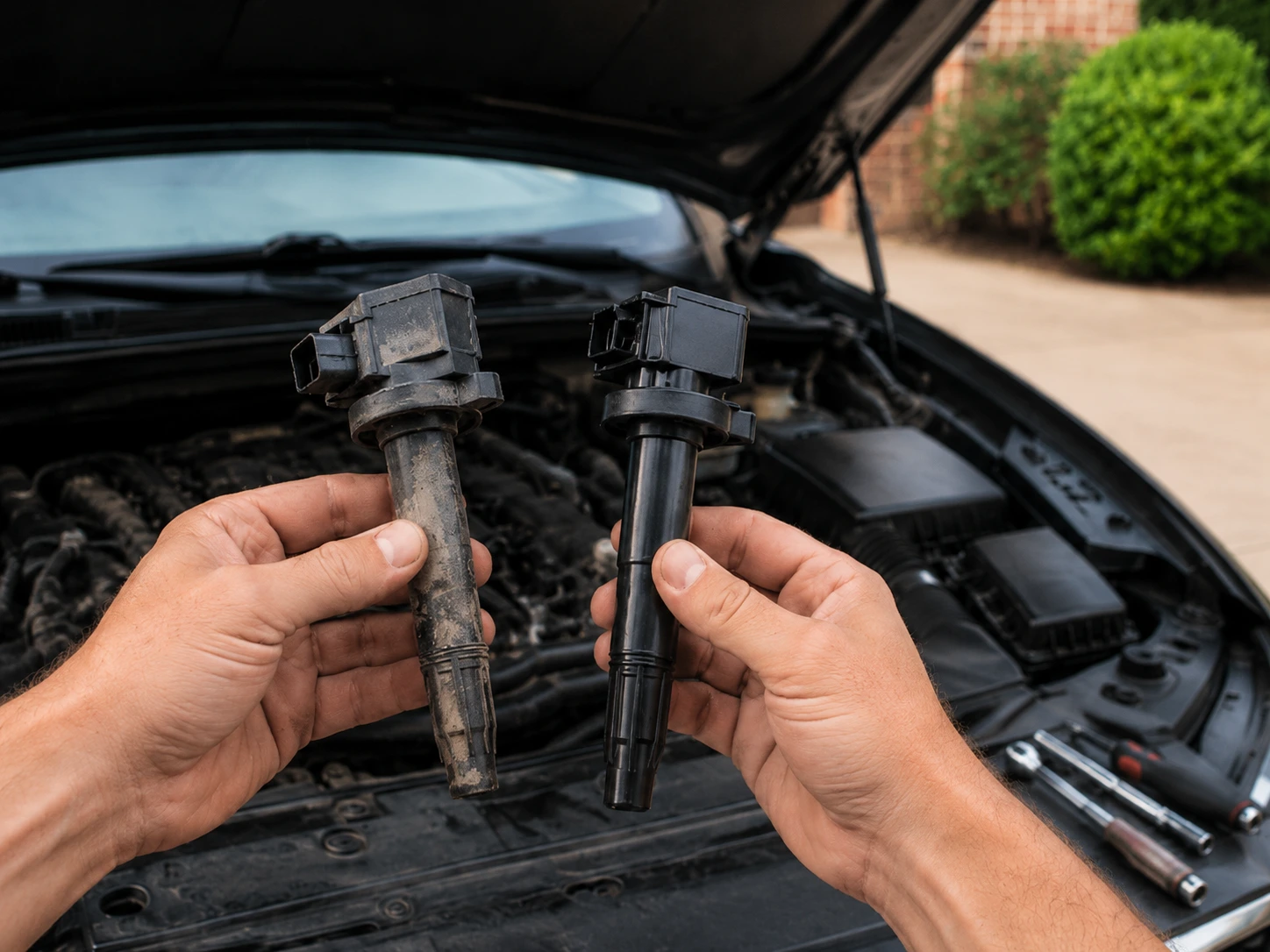
Quick Answer
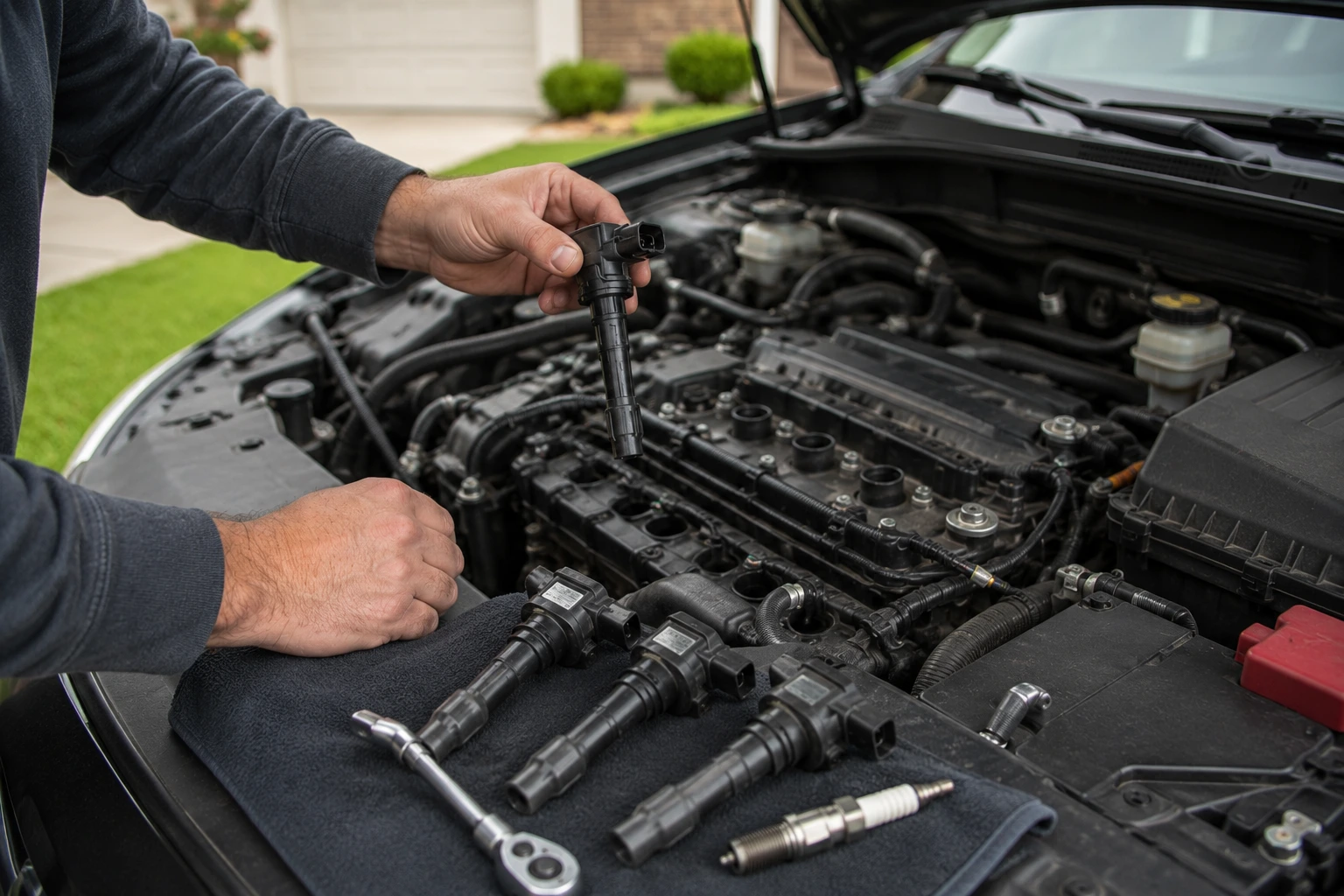
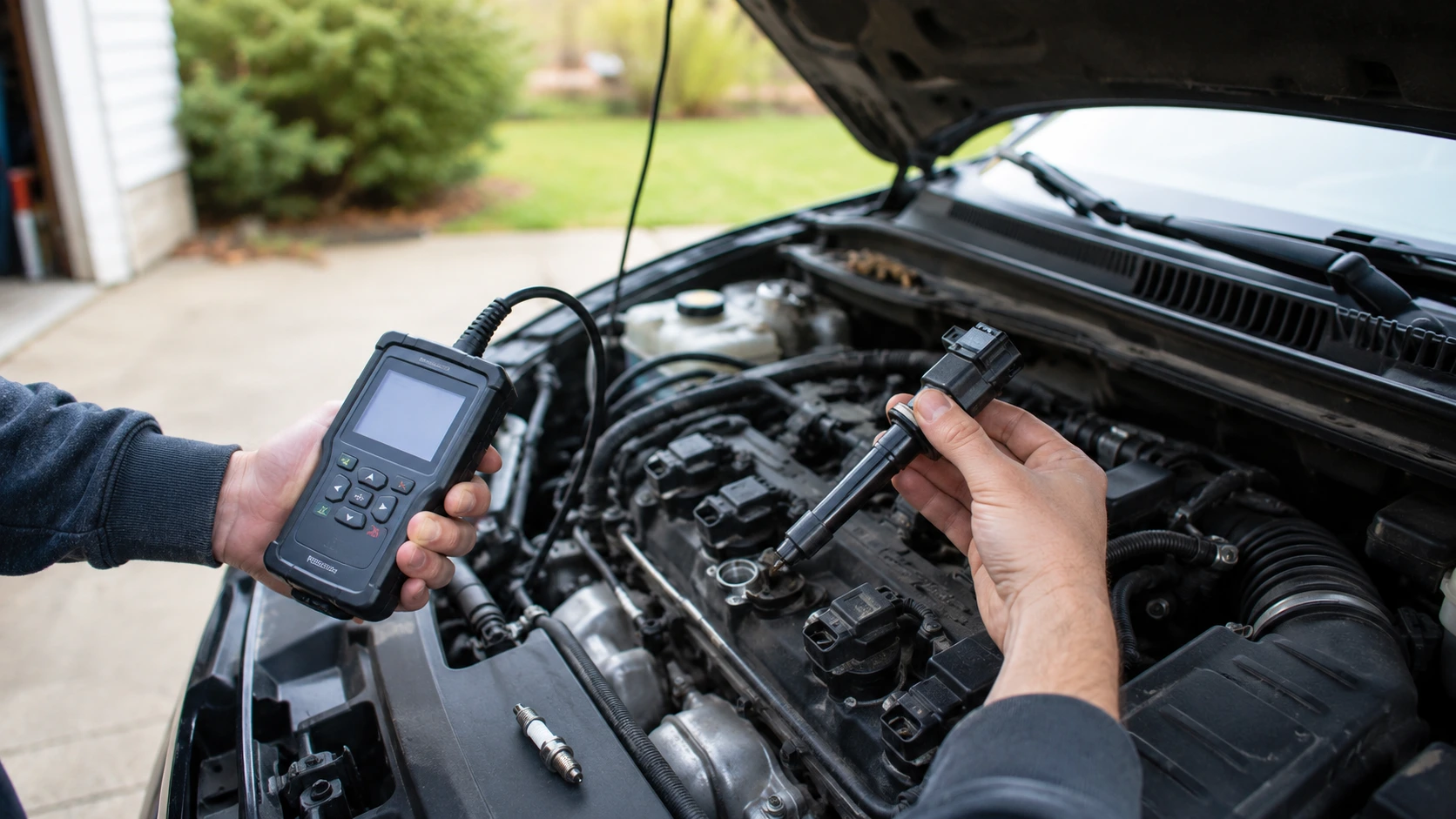
The easiest DIY way to test an ignition coil is the coil swap test. If your scan tool shows a cylinder misfire, move that cylinder’s ignition coil to another cylinder, clear the code, and run the engine. If the misfire follows the coil, the ignition coil is likely bad.
You can also inspect the coil visually, check for loose connectors, look for oil or water in the spark plug well, and use a multimeter for basic resistance checks. However, a coil can sometimes pass a basic resistance test and still fail under heat or load.
Tools You May Need
- OBD-II scanner
- Socket set
- Ratchet and extension
- Screwdriver or trim tool
- Multimeter
- Dielectric grease
- Gloves and safety glasses
- Repair manual or cylinder layout diagram
Safety First
Before testing:
- Park on a flat surface.
- Let the engine cool.
- Keep hands away from moving belts and fans.
- Do not touch ignition components while the engine is running unless following proper service procedures.
- Disconnect the battery if removing ignition parts on vehicles where the manual recommends it.
Method 1: Scan for Codes
Connect an OBD-II scanner and read stored and pending codes.
| Code Type | What It Tells You |
|---|---|
| P0300 | Random or multiple misfire |
| P0301–P0308 | Misfire by cylinder |
| P0351–P0358 | Ignition coil circuit fault |
| Fuel trim codes | Possible air/fuel issue |
| Catalyst codes | Possible damage from long-term misfire |
Do not replace the coil only because a code exists. Use the code to guide testing.
Method 2: Visual Inspection
Remove the engine cover if needed and inspect the coil area.
What to Look For
- Cracked ignition coil housing
- Burn marks
- Corrosion
- Loose connector
- Broken locking tab
- Oil in spark plug tube
- Water intrusion
- Torn coil boot
- Carbon tracking on boot or plug
If oil is inside the spark plug well, fix the leak before installing new parts.
Method 3: Coil Swap Test
This is the most useful DIY test on coil-on-plug engines.
Steps
- Scan the vehicle and identify the misfiring cylinder.
- Turn off the engine.
- Move the suspected ignition coil to another cylinder.
- Clear codes.
- Start the engine and drive or idle until the misfire returns.
- Rescan the vehicle.
How to Read the Result
| Result | Likely Meaning |
|---|---|
| Misfire moves with the coil | Coil is likely bad |
| Misfire stays on original cylinder | Check spark plug, injector, compression, and wiring |
| Coil circuit code follows the coil | Coil or connector issue |
| No code returns | Intermittent issue; monitor again |
Method 4: Spark Plug Inspection
A bad spark plug can mimic a bad ignition coil. Remove and inspect the plug from the misfiring cylinder.
Replace the Spark Plug If You See
- Worn electrode
- Cracked insulator
- Heavy carbon fouling
- Oil fouling
- Incorrect gap
- Burned tip
If the plugs are old, replacing coils without replacing plugs may lead to repeat misfires.
Recommended product: Ignition Coils & Spark Plugs Kits


Method 5: Multimeter Test
Some ignition coils can be checked with a multimeter, but this method has limitations. Resistance values vary by vehicle and coil design, so always compare readings with the service manual.
A coil can pass a cold resistance test but fail when hot, under load, or at high RPM.
When Testing Is Not Enough
Replace the ignition coil if:
- The misfire follows the coil.
- The coil is cracked or burned.
- The coil boot is damaged.
- The coil has a confirmed P035X circuit code.
- The vehicle misfires under load and the coil tests weak.
- The coil connector and spark plug are confirmed good.
DIY Difficulty Rating
A-Premium Wrench Rating: 2/5 to 3/5
| Vehicle Layout | Difficulty |
|---|---|
| Inline 4-cylinder with exposed coils | Easy |
| V6 with front bank access | Moderate |
| V6/V8 with intake manifold removal | Harder |
| Turbocharged or tight engine bay | Advanced |
FAQs
Can I test an ignition coil without a scan tool?
Yes, but it is harder. You can inspect the coil, check the spark plug, and look for visible damage. A scan tool makes diagnosis much easier because it identifies the misfiring cylinder.
Can an ignition coil test good but still be bad?
Yes. Some coils fail only when hot or under load. A basic resistance test may not reveal an intermittent failure.
Is the coil swap test reliable?
It is one of the most practical DIY tests. If the misfire moves with the coil, the coil is very likely the problem.
Can I unplug an ignition coil while the engine is running?
This is not recommended for most DIYers. It can be unsafe and may damage components. Use a scan tool and coil swap test instead.
Should I replace the spark plug before testing the coil?
If the spark plug is old, fouled, or visibly damaged, replace it. A bad spark plug can cause the same misfire symptoms as a bad coil.


