How to Clean Your Car's Engine Bay

Cleaning your car’s engine bay not only enhances its appearance but also helps maintain engine performance by preventing buildup of dirt and grime. This guide will walk you through the steps needed to safely and effectively clean your engine bay.





Cleaning your car’s engine bay is an important maintenance task that not only enhances the appearance of your vehicle but also helps you spot potential issues like leaks or wear. A clean engine bay can make routine inspections easier and even improve resale value. Here’s a step-by-step guide on how to clean your car’s engine bay effectively.
Gather Necessary Supplies
Before you start, gather all the tools and materials you’ll need for the job:
Engine degreaser: Choose a suitable degreaser for automotive use.
Soft brushes and rags: These will help you scrub away dirt without damaging components.
Water source: A hose or pressure washer works best for rinsing.
Plastic bags or aluminum foil: Use these to cover sensitive components like electrical connections and air intake.
Safety gear: Wear gloves and goggles to protect yourself from chemicals and debris.
Preparation
Preparation is key to a successful engine bay cleaning. Preparation is key to a successful engine bay cleaning. Start by ensuring your engine is cool to prevent burns. Disconnect the battery if necessary, especially if you’re concerned about water getting into electrical components. Remove any debris, leaves, or dirt from the engine bay to give you a clear working area. Cover sensitive areas, such as the air intake and electrical connections, with plastic bags or aluminum foil to prevent water damage.
Specific Cleaning Steps
Once you’ve prepared the engine bay, it’s time to dive into the cleaning process.
Degreasing the engine bay
Once you’re prepared, it’s time to apply the degreaser. Spray it generously on the dirty areas of the engine bay, focusing on spots with grease and grime. Allow the degreaser to sit for a few minutes; this will help break down tough dirt. If you're using a new product, it’s wise to test it on a small, inconspicuous area first to ensure it won’t damage any surfaces.
Scrubbing and cleaning
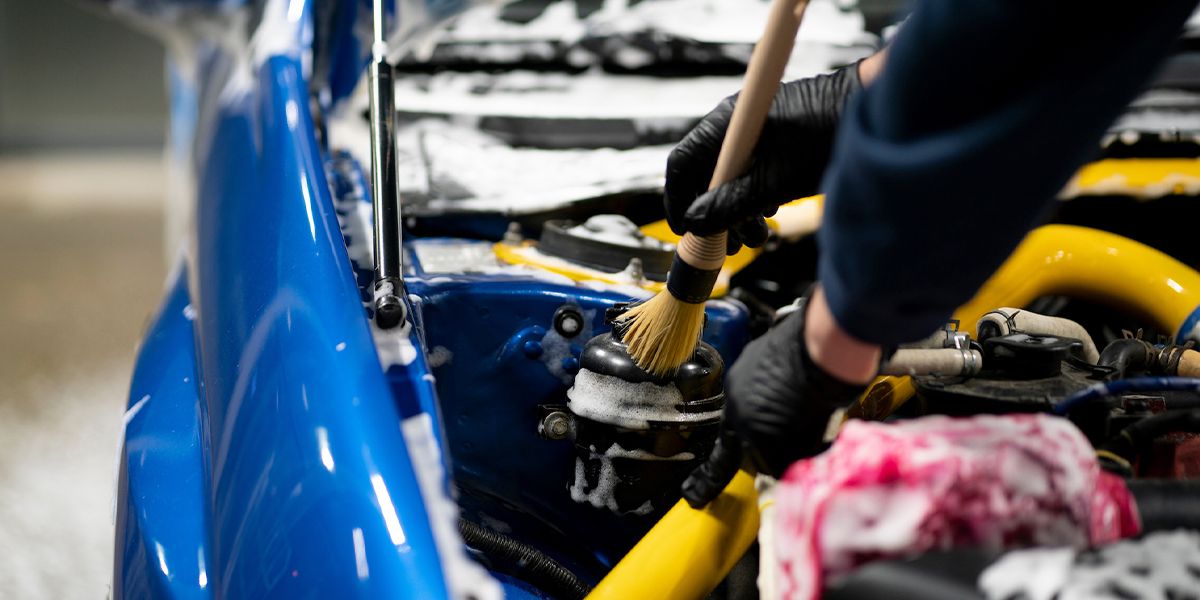
After the degreaser has had time to work, grab your soft brushes and rags. Use them to scrub the engine bay, paying special attention to crevices and hard-to-reach areas. A toothbrush can be particularly effective for detailed cleaning. Make sure to remove all the grime, as this will not only improve the appearance but also help maintain the engine's health.
Rinsing the engine bay
Once you’ve scrubbed the engine bay clean, it’s time to rinse off the degreaser. Use a hose or a pressure washer set to low pressure to gently rinse the engine bay. Be cautious not to spray water directly onto sensitive components, as this could cause damage. Ensure that you rinse thoroughly to remove any residue left by the degreaser.
Drying the engine bay
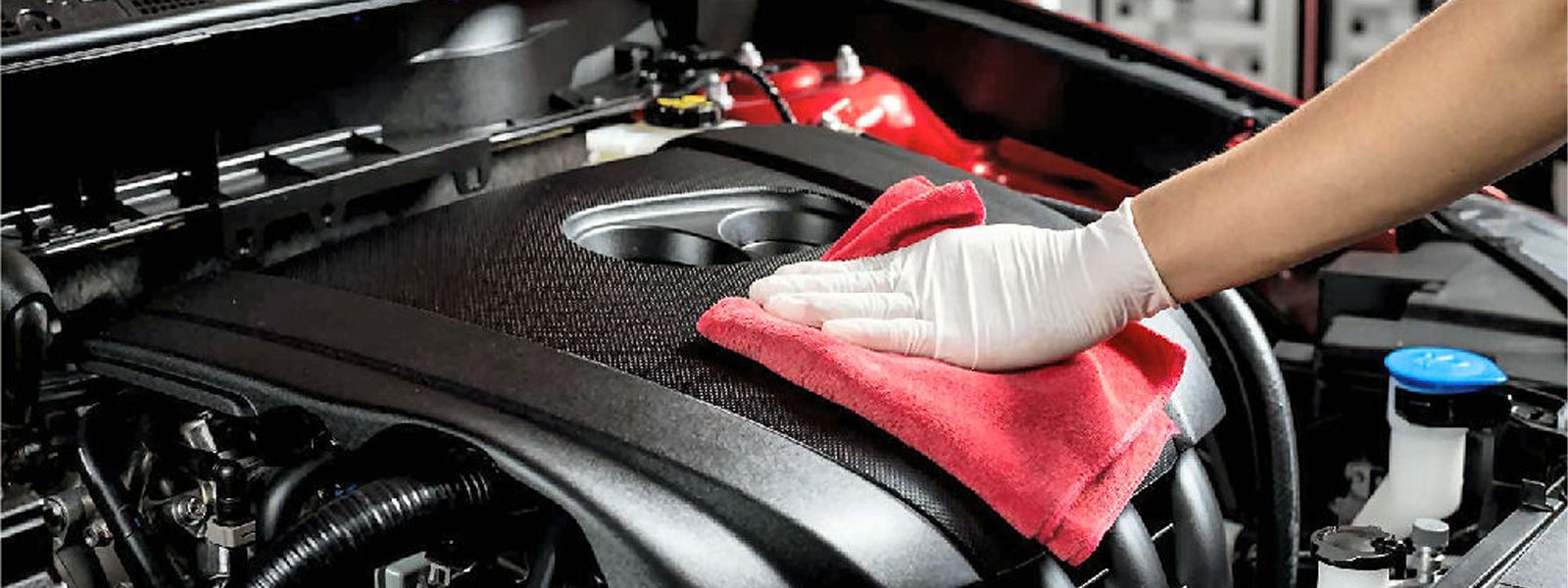
After rinsing, use a microfiber towel to wipe down surfaces and absorb excess water. Leave the hood open for a while to allow the engine bay to air dry completely. This step helps prevent moisture buildup, which can lead to rust or electrical issues.
Final touches
For an added touch, consider applying a silicone-based protectant to hoses and plastic components. This can enhance their appearance and protect against fading and cracking. Finally, take a moment to check your fluid levels and look for any leaks that might have been obscured by dirt and grime.
FAQs
Q: Is it safe to wash the engine bay with a hose?
A: While washing the engine bay with a hose can be safe, caution is essential. Avoid spraying sensitive electrical components directly, and use a gentle stream to minimize water intrusion. Covering vulnerable areas can also help protect them from moisture.
Q: What if I accidentally get water in the engine?
A: If water accidentally gets into the engine, it can lead to serious issues like misfiring or stalling. If this happens, dry the components as quickly as possible. If you notice performance issues afterward, it’s best to consult a professional mechanic.
Q: How often should I clean my engine bay?
A: Cleaning your engine bay every 6 to 12 months is a good rule of thumb. However, if you frequently drive in dusty or muddy conditions, more frequent cleaning may be necessary to prevent buildup and maintain visibility for inspections.
Q: What should I do if I find leaks after cleaning?
A: If you discover leaks after cleaning, it’s crucial to investigate immediately. Identify the source of the leak and address it promptly to avoid further damage. Regular engine bay cleaning can help you spot these issues earlier.


