Exploring the Ford F-Series: An Introduction to Its Rich Vehicle Model History (I)

Looking at the first seven generations of the Ford F-Series, the world's best-selling pickup truck, whose rich history has shaped the industry and introduced groundbreaking features, advanced technology and global market dominance.
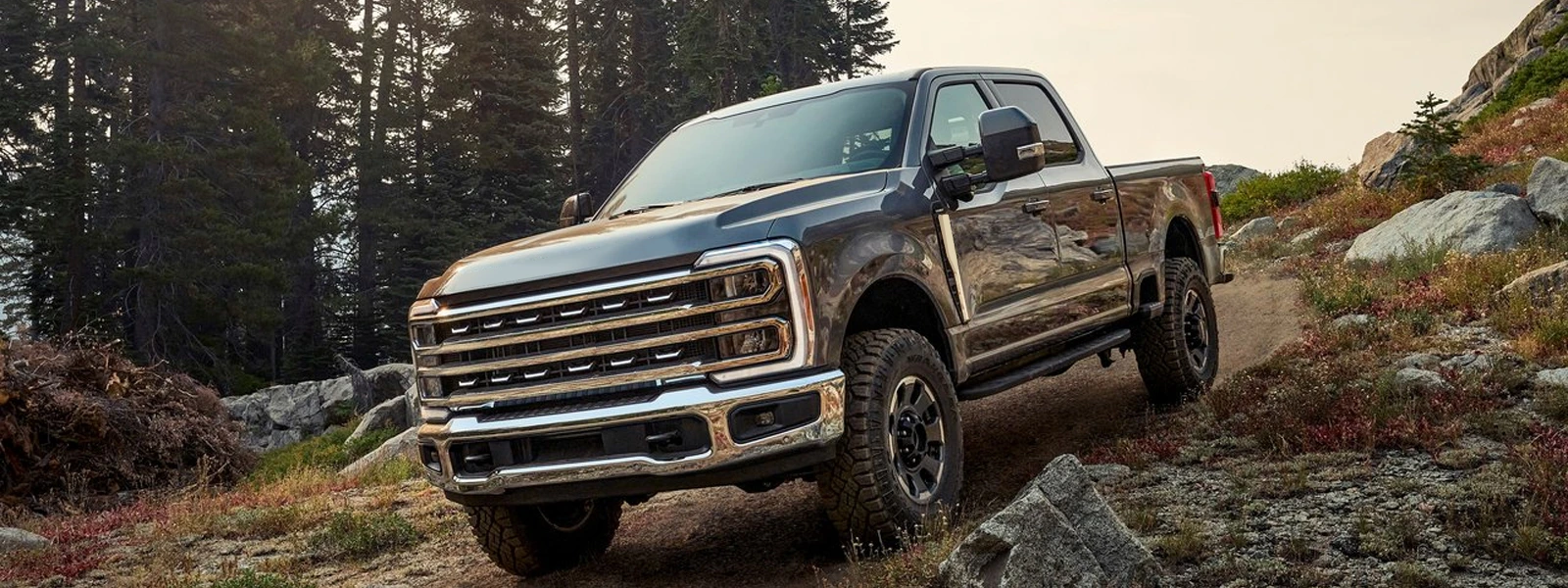
Pickup trucks have become an integral part of our daily lives, and when it comes to pickup trucks, the Ford F-Series stands tall as the undisputed king, holding the title of the world's best-selling pickup truck model. With a history spanning over 70 years since its inception, the Ford F-Series has continuously evolved, leading to its current remarkable achievements. Now, let's delve deeper into the evolutionary history of the Ford Raptor.
First Generation F-Series (1948 - 1952)
Following the end of World War II in the late 1940s, Ford turned its attention towards developing the next generation of trucks for the consumer market, which eventually came to be known as the F-Series Bonus Built trucks. This lineup encompassed a range of models, starting from the half-ton F-1 pickup truck to the heavy-duty F-8 convertible, each with varying body sizes and payload capacities. This marked the beginning of Ford's comprehensive strategy for pickup trucks, setting the stage for what was to come.

Second Generation F-Series (1953 - 1956)
The second generation of the F-Series introduced the iconic vintage F-Series trucks that have left an indelible mark on the pickup truck landscape. The naming system used during this era still remains in use today. The F-1 was rebranded as the F-100, while the F-2 and F-3 trucks merged to form the F-250. The F-4 was transformed into the F-350, and the heavy-duty models found their place in Ford's newly established commercial vehicle division. This generation saw the inclusion of new comfort features, such as armrests, sun visors, dome lights, and an optional automatic transmission. Additionally, the flathead V8 engine was replaced in 1954 with a more advanced overhead-valve V8 powerplant.
Third Generation (1957 - 1960)
In 1957, Ford unveiled the third-generation Ford F-Series with a distinctive front face design featuring almost straight lines for the bumper and hood. This generation witnessed the discontinuation of the four-door panel truck version. In terms of power, the third-generation models were equipped with inline 6-cylinder and V8 engines, offering a maximum horsepower range of 137 to 186. It was also during this period that Ford began manufacturing its own four-wheel drive systems.
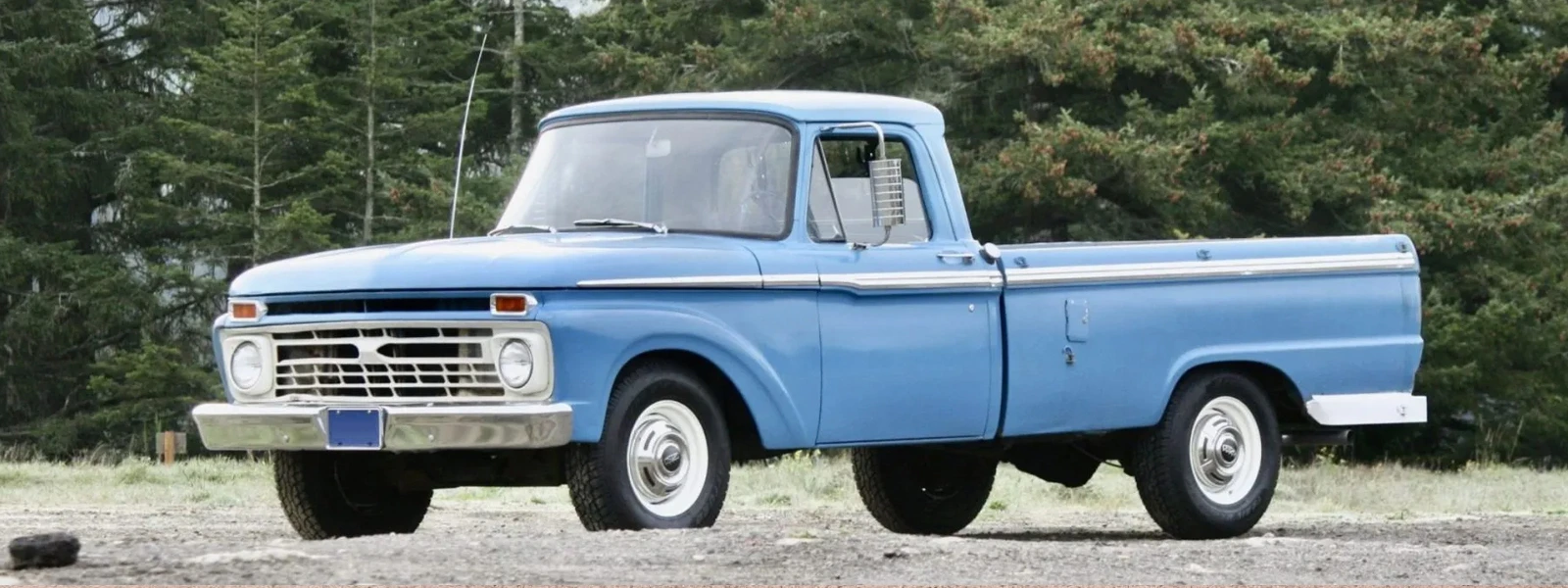
Fourth Generation (1961 - 1966)
The fourth generation of F-Series pickups made its debut in 1961, featuring a traditional solid-axle suspension. However, in 1965, Ford introduced its renowned twin I-beam setup, a suspension system that revolutionized the driving experience for two-wheel drive models by delivering a "car-like" feel without compromising truck-like capabilities. While the twin I-beam suspension proved reliable and served for decades, some owners expressed concerns about increased tire wear resulting from this design. Furthermore, 1965 marked the introduction of Ford's first official four-door pickup truck, a special-order F-250. The top-of-the-line Ranger model made its appearance in 1966, offering "advanced features" such as carpeting, power brakes, power steering, and air conditioning.
Fifth Generation (1967 - 1972)
The fifth-generation F-150 emerged as a defining moment in the design style of the F-Series pickup trucks for the next decade or two. It exhibited distinct features such as the Ford logo spelled out in capital letters on the hood, integrated grille headlights, and a revised cab that added nearly 4 inches of shoulder room.
Sixth Generation (1973 - 1979)
Although the sixth-generation F-Series shared a striking resemblance to its predecessor, it introduced a redesigned grille, parking lights positioned above the headlights, and recessed side markers. In 1974, the Club Cab was introduced, offering either a pair of center-facing jump seats or a small bench seat with a fold-out bottom cushion. The F-150 was first introduced in 1975 and quickly surpassed the popularity of the F-100, although orders for the F-100 continued until 1983. In 1978, tangent-style headlights were also offered, catering to the higher trim levels of the model.
Seventh Generation (1980 - 1986)
Dubbed as "the first new truck of the 1980s" by Ford, the seventh-generation F-Series focused on enhanced aerodynamics and an exquisite interior. While the F-150 enjoyed strong sales with 173,050 units in 1980, the F-100 still found 133,590 eager buyers. Interestingly, 73% of these F-100 models were equipped with Ford's reliable inline six-cylinder engine, featuring a single-barrel carburetor and delivering 117 horsepower and 223 pound-feet of torque. Eventually, the F-150 replaced the F-100 as the base model of the F-Series lineup by the end of 1983.
Stay Tuned for the Next Chapter: Unveiling the Evolution of the Ford F-Series
If you're eager to dive deeper into the rich history of the Ford F-Series vehicle models, we hope you've enjoyed this initial exploration. The Ford F-Series has a captivating story that spans decades, with each generation introducing remarkable advancements and innovations. From the early days of the Bonus Built trucks to the modern-day powerhouse that is the Ford Raptor, this legendary lineup has continuously shaped the pickup truck industry.
In our upcoming second installment, we will delve into the later generations of the F-Series, including the ever-popular F-150 and its groundbreaking features, as well as the introduction of more powerful engines, advanced technology, and luxurious amenities. We'll also explore how the Ford F-Series has maintained its dominance in the global market, consistently delivering on performance, durability, and versatility.
So, don't miss out on the next chapter of our journey through the captivating evolution of the Ford F-Series. Stay tuned for a deeper dive into the iconic lineup that has captured the hearts of truck enthusiasts worldwide.


