Brake Pads Ceramic: Guide to Quiet, Low-Dust Stopping Power

This blog post provides a comprehensive technical guide to ceramic brake pads, positioning them as the premier choice for modern daily drivers who prioritize quiet operation and clean wheels.

Key Takeaways
-
Ceramic brake pads are designed for quiet operation, low brake dust, and consistent stopping power, making them ideal for everyday driving and city commutes. Ceramic brake pads are often considered the best brake pad material choice for many luxury vehicle brands.
-
These pads typically last longer than organic brake pads and are gentler on rotors than many semi metallic options, though they cost more up front due to their more complex manufacturing process.
-
There is a difference between ceramic and other brake pad types: ceramic pads are not always the best choice for heavy towing, track use, or extreme cold conditions—semi metallic brake pads may perform better in those scenarios, making them more suitable for demanding driving conditions.
-
A-Premium offers direct-fit ceramic pads for popular cars, trucks, and SUVs, with free standard shipping and 90-day free returns for DIY drivers and professionals.
-
Most drivers who prioritize clean wheels, low noise, and reliable braking will be very satisfied with quality ceramic pads.
What Are Ceramic Brake Pads?
Ceramic brake pads are made from dense ceramic compounds mixed with fine copper or other non-ferrous fibers, engineered specifically for modern disc brake systems on passenger vehicles. These pads are composed of material similar to pottery and plates, but are engineered to be denser and more durable for automotive use. This friction material creates a durable surface that handles heat efficiently while producing minimal dust.
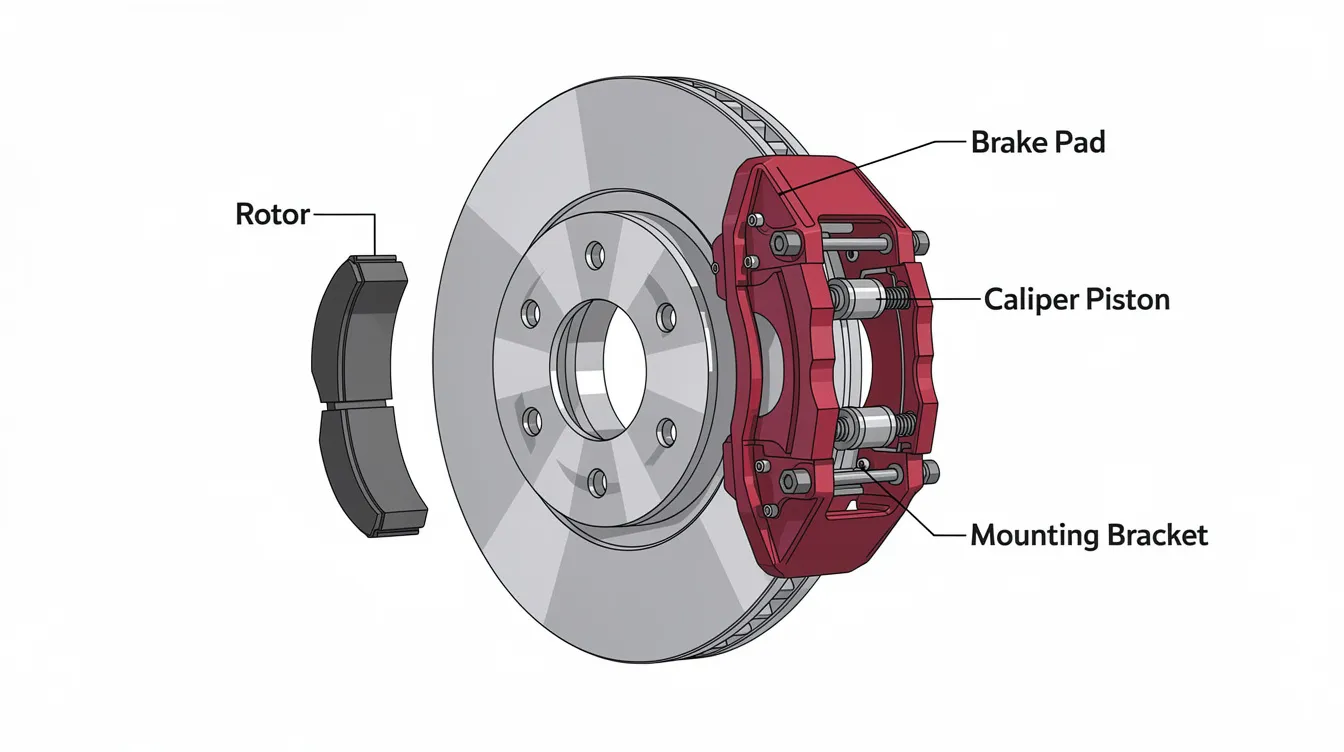
Inside your vehicle’s brake system, ceramic pads sit within the brake caliper. When you press the brake pedal, hydraulic pressure forces pistons to push the pads against the spinning rotor, converting your car’s kinetic energy into heat through friction.
Ceramic pads first gained popularity on luxury vehicles during the 1990s and 2000s. Today, they’re widely available as aftermarket upgrades from brands like A-Premium. Typical applications include daily-driven sedans, crossovers, compact SUVs, and light-duty trucks that see mostly city and highway use rather than racing or heavy hauling. Taking into account the differences in brake pad materials, such as ceramic versus semi-metallic, is important for maintaining safety and performance in your vehicle's braking system.
How Ceramic Brake Pads Work
The hydraulic brake system operates simply: pressing the pedal builds pressure in brake fluid, which travels through brake lines to push caliper pistons outward. These pistons amplify hydraulic pressure to clamp the pads against the spinning rotors. When you press the brake in your car, the brake pads are pushed toward the wheel to apply friction and stop the car. This high-pressure mechanical bond efficiently converts the vehicle’s kinetic energy into thermal energy to bring you to a smooth, controlled stop.
Ceramic friction material grips the rotor while dispersing heat across the pad surface. This results in stable, predictable braking in typical commuting conditions. The ceramic’s density also dampens high-frequency vibrations, producing the quieter operation many drivers prefer.
Ceramic vs. Semi Metallic Under Heat:
-
Ceramic: Engineered for thermal stability in typical driving ranges (up to 600°F). It prioritizes a consistent friction coefficient and pedal feel during daily commutes.
-
Semi-Metallic: Offers superior heat dissipation at extreme temperatures (1,000°F+). The high metal content pulls heat away from the braking surface, making it resistant to brake fade during heavy-duty use.
While ceramic pads handle normal braking heat very well, they’re tuned more for consistency and comfort than extreme high-heat performance like repeated track stops from 100+ mph. If your brakes do not respond as expected, it means there may be an issue with the pads or the braking system that should be inspected promptly.
Pros and Cons of Ceramic Brake Pads
Pros:
-
Low Dust. Ceramic brake pads are typically lighter than other types, which can benefit performance and efficiency. They produce the least amount of brake dust compared to other types of brake pads (50-80% less than metallic pads), keeping your wheels cleaner.
-
Acoustic Comfort. Quieter braking from integrated shims and chamfered edges. Consistent pedal feel across wide temperature ranges.
-
Rotor Longevity. Because ceramic compounds are less aggressive than steel-fiber pads, they significantly reduce physical scoring on the rotors, often leading to a longer service life for the entire braking system under standard operating conditions.
-
Service Life. Long service life of 35,000-70,000 miles in mixed driving conditions.
Cons:
-
Initial Cost. Ceramic brake pads are generally more expensive than both semi-metallic and organic brake pads (typically 20-50% more than semi metallic).
-
Cold Bite. Ceramic pads may require a brief “warm-up” period. You might notice a slightly softer “bite” during the first one or two stops of the morning until the pads reach their optimal operating temperature.
-
Heavy Load Limits. Reduced suitability for heavy towing, repeated mountain descents, or track days where heat management becomes crucial.
A commuter in Los Angeles or Houston doing stop-and-go and freeway driving is an ideal ceramic pad candidate. A pickup that regularly tows a large camper through Colorado passes may benefit more from semi metallic pads.
Choosing ceramic pads involves trade-offs between comfort, cleanliness, longevity, cost, and extreme-performance capability. A-Premium’s ceramic pads are engineered to balance these factors for everyday and light-duty use. Match the pad type to your realistic driving habits for best results.

Ceramic vs. Metallic and Organic Brake Pads
Modern replacement brake pads fall into three categories: ceramic, semi metallic, or organic (NAO). Each material fits a different kind of driver and vehicle.
Semi metallic pads contain 30-70% metal content (steel, iron, or copper alloys). They deliver strong high-heat performance and superior bite but produce 2-4x more dust, create more noise, and accelerate rotor wear. They’re often preferred for performance driving or heavy-duty work.
Organic pads blend rubber, Kevlar, glass fibers, and resins. They’re the quietest and least expensive option but wear fastest (20,000-40,000 miles) and may fade under repeated hard braking.
|
Material |
Best For |
Main Trade-Offs |
|---|---|---|
|
Ceramic |
Daily commuting, clean wheels |
Higher cost, less cold bite |
|
Semi Metallic |
Towing, performance, track |
More dust, noise, rotor wear |
|
Organic |
Budget, low-mileage |
Faster wear, heat fade |
A-Premium primarily recommends ceramic for daily use but offers other pad types for specialized needs.
When Are Ceramic Brake Pads the Right Choice?
Ceramic pads excel when your priorities are quiet braking, clean wheels, and lower long-term maintenance rather than maximum track performance. However, the best brake pad choice ultimately depends on your driving style—whether you mostly commute in the city, drive aggressively, or need pads for heavy-duty use.
Good use cases:
-
Daily commutes under 60 miles
-
Mostly paved road driving
-
Mild to moderate climates
-
Vehicles like compact cars, minivans, and crossovers
Less ideal situations:
-
Frequent heavy towing with half-ton or larger trucks
-
Commercial vans with full payloads daily
-
Repeated mountain descents or club track days
-
Heavy-duty towing, racing, or extreme cold conditions
Ceramic brake pads are generally not recommended for severe-duty applications where semi-metallic pads provide superior stopping power.
A DIY owner of a 2018 Toyota Camry who mainly drives in urban traffic will usually prefer ceramic pads. A contractor with a 2019 Ford F-250 towing equipment trailers several times weekly may choose semi metallic.
Check A-Premium’s fitment finder by entering your year, make, and model to see recommended pad materials.
How Long Do Ceramic Brake Pads Last?
Ceramic brake pads allow you to stop your car safely, but they need to be replaced after a while due to normal wear and tear. Changing brake pads is a crucial part of routine maintenance for your vehicle. Ceramic brake pad life commonly ranges from 35,000 to 70,000 miles under normal driving, with some highway-driven vehicles exceeding 80,000 miles.
Key factors affecting pad life:
-
Braking Aggression: Frequent hard stops increase friction wear.
-
Environmental Load: Stop-and-go city traffic vs. steady highway cruising.
-
System Health: Properly lubricated caliper slide pins ensure even pad wear and prevent premature replacement.
Quick Reference: If you mostly drive in city traffic, start checking ceramic pads around 30,000-40,000 miles. Highway commuters can often stretch inspections to 40,000-50,000 miles but should still check annually.
A-Premium recommends visual inspection of pad thickness during every tire rotation (around every 5,000-7,500 miles) to ensure safety and prevent metal-on-metal contact that can damage rotors.
Signs Your Ceramic Brake Pads Need Replacement
Even durable ceramic pads eventually wear down. Recognizing warning signs early helps prevent rotor damage and unsafe stopping distances.
Key symptoms:
-
Squealing or chirping from built-in wear indicators
-
Longer stopping distances
-
Firmer or lower pedal feel
-
Visible thin friction material (less than 3mm) through wheel spokes
Some ceramic pads stay very quiet until almost worn out, so visual inspection remains crucial. On vehicles with pad wear sensors (BMW, Mercedes-Benz, Audi), the dashboard warning light indicates it’s time to replace pads promptly.
Grinding noises suggest pad material is gone entirely—consult a professional, as rotors may already be scoring.
How to Choose the Right Ceramic Brake Pads for Your Vehicle
The right ceramic pad must match your vehicle’s year, make, model, trim, and braking system specifications. There is no universal brake pad that fits all vehicles and driving needs—the best choice depends on your specific vehicle and driving habits.
Considerations:
-
OE pad material recommendations in owner’s manual
-
Typical driving pattern (city, highway, towing)
-
Local climate (cold winters vs mild temperatures)
-
Quietness and dust reduction priorities
Selection steps:
-
Check your owner’s manual or existing pads
-
Enter vehicle details into A-Premium’s online catalog
-
Compare ceramic pad options by warranty and customer reviews
-
Confirm front vs rear fitment
A-Premium ceramic pads are designed as direct-fit replacements, often including hardware like shims and clips. Mixing pad materials front-to-rear can work if done thoughtfully, but keep pad types matched per axle for consistent behavior.
DIY Installation Tips for Ceramic Brake Pads
Many owners successfully replace pads at home using basic tools, but safety and proper procedures are critical for reliable results.
Essential tools:
-
Jack and jack stands
-
Lug wrench and appropriate sockets
-
C-clamp or brake caliper tool
-
Torque wrench
-
Brake cleaner and high-temp brake grease
Basic sequence: Safely lift and secure vehicle, remove wheel, unbolt caliper, retract piston, remove old pads and hardware, clean and lubricate contact points, install new ceramic pads with supplied clips/shims, reassemble, torque bolts to spec, and bed-in the pads.
Bedding-in: To ensure maximum performance, perform 10–20 decelerations from 35 mph to 5 mph without coming to a complete stop. This transfers a thin, even layer of ceramic material onto the rotor surface, preventing "hot spots" and future vibration.
Always consult a factory service manual for torque specs specific to your vehicle. Never work under a car supported only by a jack.

Why Buy Ceramic Brake Pads from A-Premium?
A-Premium specializes in high-quality aftermarket replacement parts, including ceramic brake pads designed as direct-fit options for a wide range of modern vehicles.
Key benefits:
-
OE-comparable friction formulations
-
Low dust and quiet operation
-
Precise fitment for Toyota, Honda, Ford, Chevrolet, Nissan, BMW, and more
Service advantages: Free standard shipping on most orders, 90-day free returns, global warehouse network for faster delivery, and 24/7 customer support for DIYers and professional shops. A-Premium is your one-stop shop for a variety of brake pads and related parts, making it easy to find everything you need for your brake repair or upgrade in one convenient place.
Use A-Premium’s online fitment tools by entering year, make, model, and engine to ensure you receive the correct ceramic pads for front and rear axles. Customers often save significantly compared with OEM dealership pricing while getting reliable, consistent braking performance for everyday driving.


FAQ: Ceramic Brake Pads
Q: Do ceramic pads ruin rotors?
A: No. In fact, they are significantly gentler on rotors than semi-metallic pads. However, if a ceramic pad is overheated beyond its limit (e.g., during track use), it can cause "glazing" on the rotor, which reduces stopping power.
Q: Can I mix pad types on my car?
A: It is highly recommended to keep the same material across a single axle (both fronts or both rears). While you can run ceramic on the front and metallic on the rear, it may slightly alter the vehicle's braking bias. For most drivers, matching all four is best.
Q: Why do my new pads smell?
A: A slight "burning" smell is normal during the first 50–100 miles. This is the resin in the friction material curing as it reaches operating temperature for the first time.
Q: Do ceramic brake pads require special brake fluid or rotors?
A: Ceramic pads work with standard DOT 3, DOT 4, or manufacturer-recommended brake fluids and typical cast iron rotors. No special fluid is required solely because of pad material. Follow your vehicle manufacturer’s brake fluid change intervals and use rotors meeting OE specifications when pairing with new ceramic pads.


