Buying a CV Axle: Do I Need an ABS Tone Ring or Not?

This quick buyer's guide cuts through the confusion, offering a step-by-step inspection checklist and VIN-matching solutions to ensure you order the exact right part on your first try.
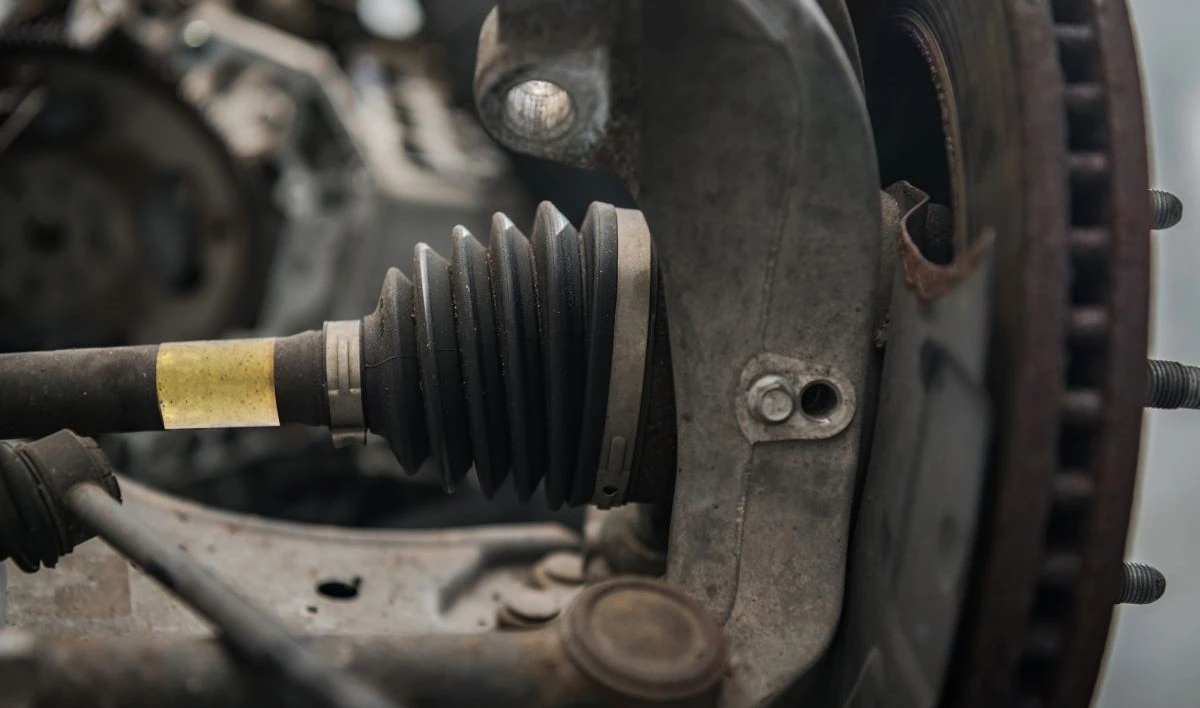
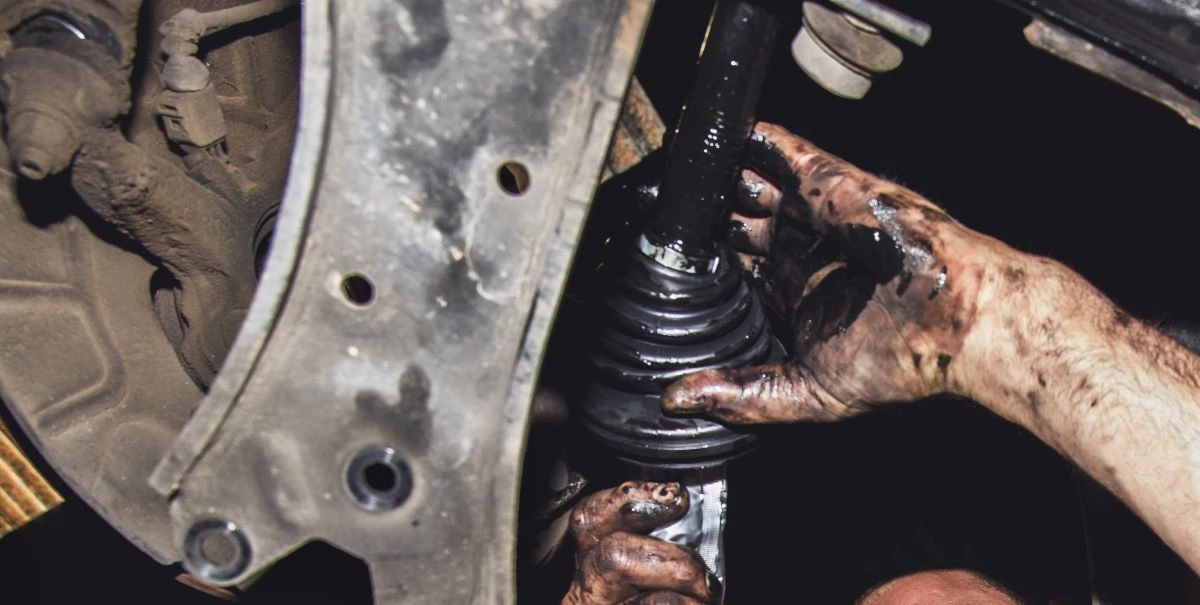
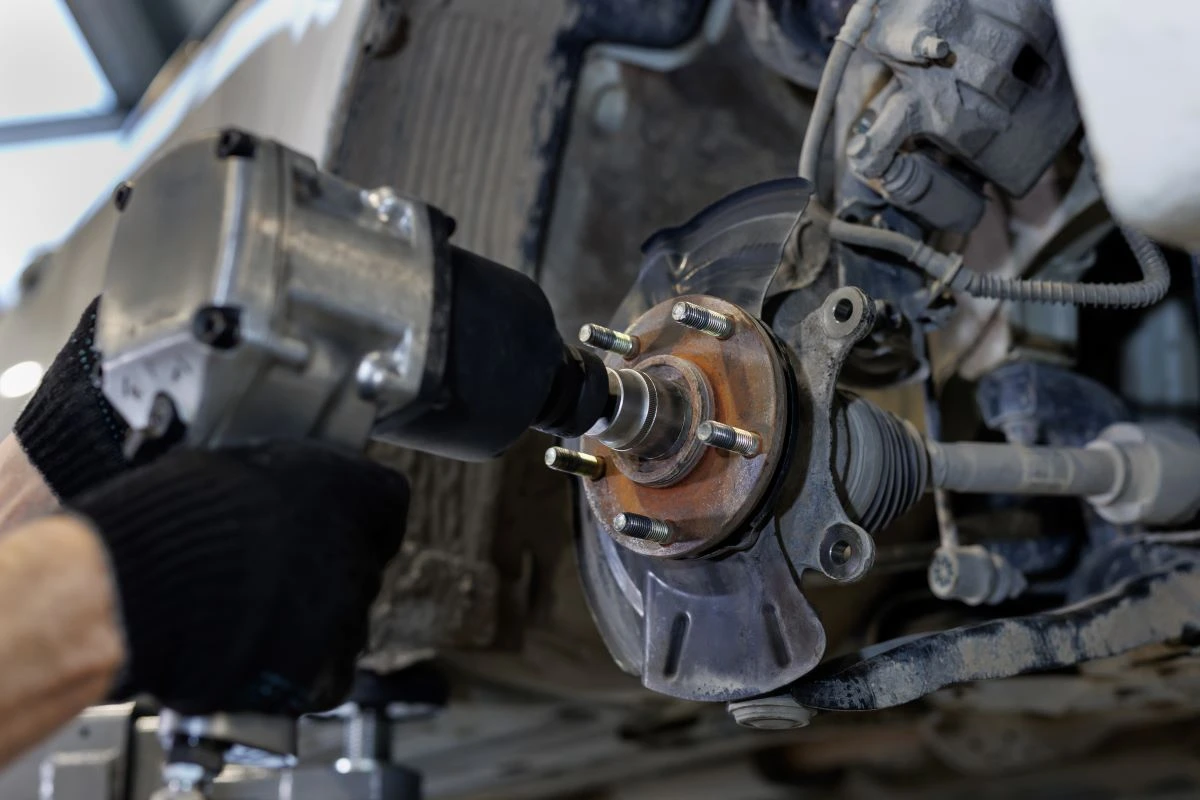
When searching for a replacement CV axle (constant velocity axle / half shaft), you will often encounter a critical configuration choice: "With ABS Tone Ring" or "Without ABS Tone Ring." Choosing the wrong one is one of the most common and costly mistakes in the automotive aftermarket.
Here is the direct answer to your most pressing compatibility question:
Quick Answer: Does the ABS Tone Ring Affect Product Fitment?
Yes, absolutely. Whether a CV axle has an ABS tone ring fundamentally determines its fitment and compatibility.
If your vehicle requires an ABS tone ring and you install an axle without one, your dashboard will immediately light up with ABS, Traction Control, and Stability Control error codes, disabling critical safety features.
If your vehicle does not require an axle-mounted ring (either because it lacks ABS or uses modern wheel-bearing sensors), a ring-equipped axle might physically bolt in, but you risk catastrophic clearance issues if the ring rubs against the steering knuckle.
To save yourself from a mid-repair disaster and expensive return shipping, you must understand how your vehicle reads wheel speed before ordering.
What Is a CV Axle and How Does It Work?
Before diving into the ABS dilemma, let's establish the hardware basics. A CV axle is a heavy-duty steel shaft that transfers rotational power from your vehicle’s transmission or differential directly to the drive wheels.
Because your wheels must constantly move up and down over bumps and pivot left and right to steer, a rigid shaft would snap instantly. The CV axle solves this by utilizing two flexible joints:
-
The Inner CV Joint: Connects to the transmission/differential and allows for up-and-down suspension travel.
-
The Outer CV Joint: Connects to the wheel hub assembly, allowing for smooth power delivery even during sharp, full-lock turns.
The outer CV joint housing is exactly where the ABS controversy sits. An ABS tone ring (also known as a reluctor ring) is a notched metal ring that looks like a miniature, aggressive gear. It sits tightly around the outer housing of the CV joint.
How CV Axle and ABS Tone Ring Work Together
The tone ring does not transmit mechanical power; it is purely an information provider. A magnetic ABS wheel speed sensor is mounted statically on the steering knuckle, positioned a fraction of a millimeter away from the spinning tone ring.
As the CV axle rotates, the metallic teeth (crests) and gaps (troughs) of the tone ring pass through the sensor's magnetic field. This action cuts the magnetic lines of force, creating an alternating current (AC) voltage pulse. The vehicle’s Electronic Control Unit (ECU) counts these pulses to determine exactly how fast that specific wheel is spinning. If the ECU detects that one wheel has stopped pulsing while the others are moving, it knows a wheel lock-up is occurring and instantly modulates brake pressure.
If a CV Axle Lacks a Tone Ring, How Does the Car Measure Speed?
If you see a smooth CV axle housing without any teeth, it doesn't mean the vehicle is blind to wheel speed. Modern automotive engineering uses a highly advanced alternative:
-
Integrated Wheel Bearing Encoders (Active Sensors): In newer vehicles, engineers moved the speed-reading mechanism off the exposed CV axle. Instead, they embedded a precise magnetic encoder ring right inside the grease seal of the wheel hub bearing. A high-precision active sensor reads the magnetic poles inside the bearing. Therefore, the CV axle itself needs no teeth—it stays perfectly smooth and compact.
Why Are There Two Different CV Axles Listed for the Exact Same Vehicle?
It is incredibly frustrating to input your vehicle's exact year, make, and model into a parts finder only to be prompted with “With ABS” or “Without ABS.” This discrepancy happens for three primary manufacturing reasons:
1. Trim Level and Option Packages
During the late 1990s through the mid-2010s, Anti-Lock Braking Systems were not mandated by law in all markets. Base model trims frequently came with traditional, non-ABS braking systems. Premium trims of the exact same vehicle featured ABS. Consequently, the base model left the factory with a smooth CV axle, while the premium model required an axle with an ABS ring.
2. Mid-Year Production Splits
Automotive manufacturers frequently update chassis dynamics mid-cycle. A car manufactured in March might use an axle-mounted tone ring. However, by June, the assembly line may have upgraded to the newer magnetic wheel bearing design. This results in the infamous "Before Production Date X" or "From Production Date Y" fitment warnings.
3. FWD vs. AWD Drivetrain Variations
Front-Wheel Drive (FWD) and All-Wheel Drive (AWD) versions of the same vehicle face completely different traction environments. An AWD model may require tone rings on all four CV axles to feed data to the torque-vectoring computer, whereas a FWD variant might only monitor the front wheels or utilize an entirely different sensor array in the rear.
How Do I Know Which CV Axle My Car Needs?
Never guess when it comes to driveline components. Use these three definitive inspection methods to confirm your fitment requirements:
The "Turn the Wheel" Visual Test (Most Reliable)
The most foolproof method requires zero tools. Jack up the vehicle safely, secure it on jack stands, and turn the steering wheel completely to one side. Crawl under with a flashlight and look directly at the back of the wheel hub where the thick axle shaft disappears into the wheel assembly.
-
If you see a distinct notched gear ring rotating with the axle, order the With ABS version.
-
If the outer bell housing is uniform, dark, and smooth, order the Without ABS version.
The Old Parts Comparison
If you have already removed the failed component, place it side-by-side with your prospective purchase. Count the teeth on your original ABS ring if one is present. Matching the tooth count (e.g., 43 teeth vs. 48 teeth) is mandatory, as a mismatched pulse rate will confuse the ECU and trigger fault codes.
Why Choose A-Premium CV Axles for Your Replacement?
When resolving complex fitment configurations, choosing a brand that understands original equipment (OE) precision is paramount. A-Premium offers a comprehensive catalog of precision-engineered CV axles tailored to navigate tricky ABS variations.
-
Exact Geometry Mapping: A-Premium CV axles are engineered to replicate factory footprints perfectly. Our ABS tone rings are manufactured with identical tooth counts and strict metallurgy profiles to output flawless sensor signals.
-
Premium Coating Technologies: Exposed axle rings face intense road salt, mud, and water. A-Premium applies specialized anti-corrosion surface treatments to our tone rings, preventing the rust buildup that causes premature sensor signal degradation.
-
Streamlined VIN Matching: To remove the stress of mid-year production splits, the A-Premium digital catalog integrates advanced 17-digit VIN-matching tools. This ensures you buy the correct configuration on your first try.
People Also Ask (FAQ)
Can I use a CV axle with an ABS ring on a non-ABS car?
In many cases, yes. If your vehicle does not have an ABS sensor mounted on the knuckle, the tone ring simply rotates harmlessly in open space. However, you must double-check clearance. On certain tighter steering knuckle configurations, the extra shoulder height of the pressed-on ABS ring can scrape against the metal housing, causing structural damage.
What happens if I put a non-ABS axle on an ABS-equipped car?
Your vehicle's ABS sensor will find nothing but a smooth, blank void when the axle spins. The ABS module will interpret this lack of signal as a permanently locked-up wheel. The vehicle will immediately fault into a safe mode, disabling your ABS, electronic braking distribution, and traction control systems.
Can a cracked ABS tone ring cause a CV axle to fail?
A cracked or broken ABS ring will not cause the mechanical components of the axle to fail—your vehicle will still drive. However, the crack will disrupt the uniform spacing of the teeth, causing the sensor to misread wheel speed. This often triggers a pulsating brake pedal feel during normal braking conditions or illuminates the ABS dashboard light.
Do all front-wheel-drive cars have ABS rings on their front axles?
No. While almost all modern cars feature ABS, many vehicles manufactured after 2015 have completely transitioned away from axle-mounted rings, preferring instead to embed magnetic sensors straight into the wheel hub assembly. Always check your specific vehicle architecture rather than relying on general assumptions.


